




Sintered NdFeB · N35–N52
The strongest permanent magnet in commercial production, pressed, sintered and plated under one roof.
Horizon supplies sintered neodymium NdFeB magnets from N35 to N52, with H, SH, UH and EH grades for motors, sensors and holding fixtures.
Powder is pressed, sintered and machined in one plant, so grade, coating and tolerance stay under one quality system.
Request a Quote
A neodymium NdFeB magnet is an alloy of neodymium, iron and boron (Nd2Fe14B), pressed and sintered into a dense block, then cut and plated.
Energy density runs roughly ten times that of ferrite. The powder is oriented in a magnetic field before sintering, so the finished part is anisotropic and reaches full strength only along the press direction.
NdFeB sits in the rare earth magnet family beside samarium cobalt, which trades strength for heat resistance.
Blocks, rings and countersunk discs cover most holding and motor work. Each shape has its own tooling path and tolerance band.
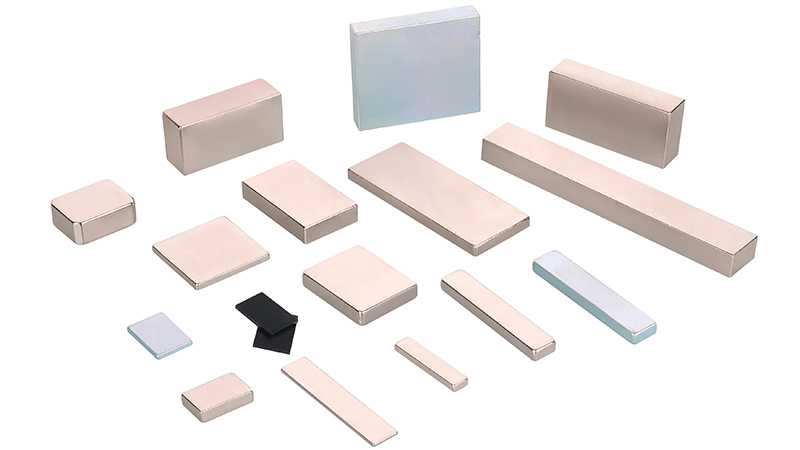
Rectangular blocks suit flat mounting, sensors and linear fixtures. Standard tolerance is ±0.05 mm, tightened to ±0.02 mm on request.
View block magnets →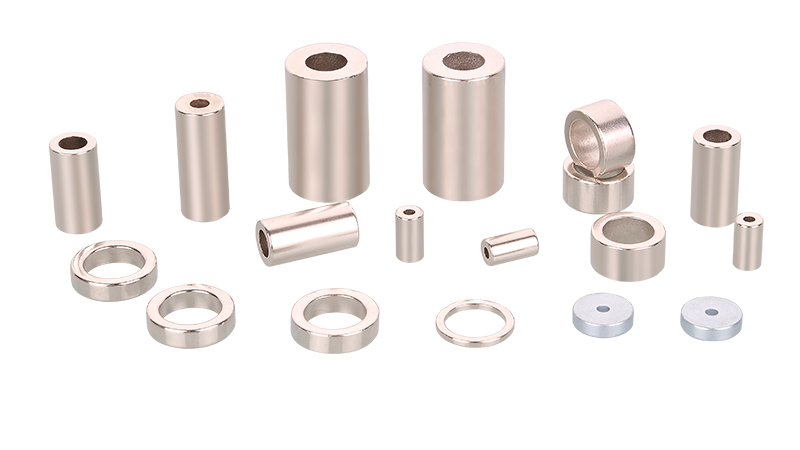
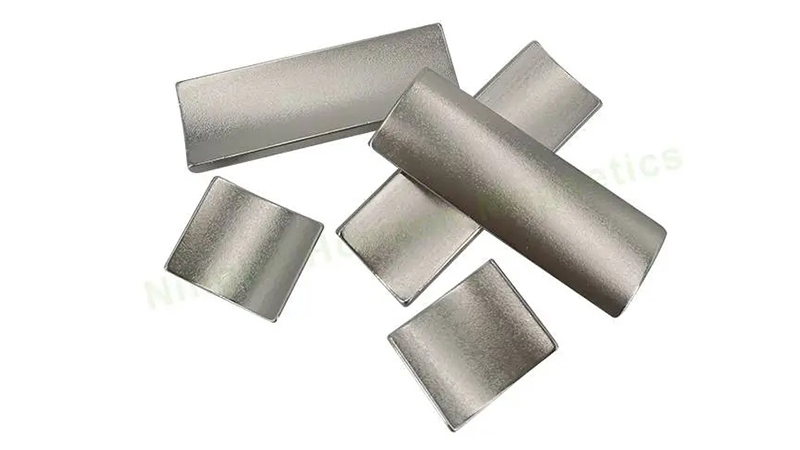
Rings and arcs are pressed to near-net shape, then ground on the bore and faces. They are the standard choice for speaker drivers and PM motors.
View ring magnets →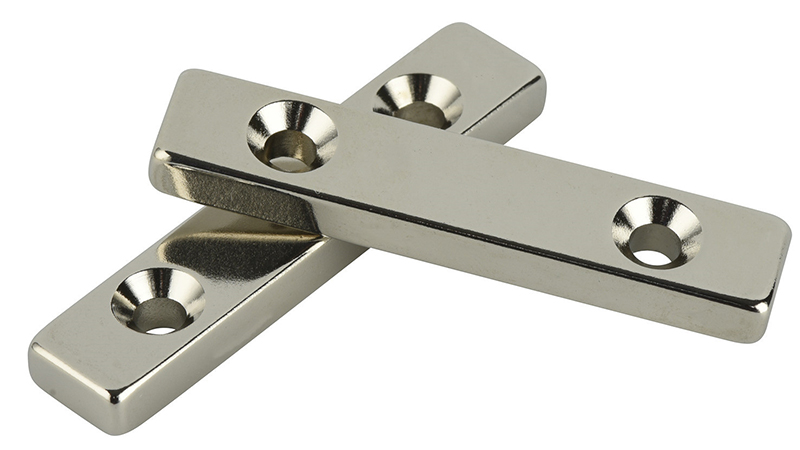
A countersunk bore lets a screw sit flush with the magnet face. These are used where the magnet must be fastened, not just held in place.
View countersunk magnets →The number after N is the maximum energy product, so N52 is stronger than N35 in the same volume. The suffix sets the maximum working temperature, which decides how much strength survives a hot application.
| Grade | (BH)max, kJ/m³ | Max working temp | Typical use |
|---|---|---|---|
| N35 | 263 – 287 | 80 °C | General holding, cost-first designs |
| N42 | 318 – 342 | 80 °C | Compact fixtures, sensors |
| N48 | 358 – 390 | 80 °C | Motor arcs, high flux per volume |
| N52 | 398 – 422 | 80 °C | Strongest grade, thin sections |
| N42H | 318 – 342 | 120 °C | Pumps, gearmotors |
| N38SH | 287 – 310 | 150 °C | Automotive under-hood, e-bike hubs |
| N35UH | 263 – 287 | 180 °C | Industrial motors, hot fixtures |
| N33EH | 247 – 271 | 200 °C | High-temp sensors, aerospace |
Grade and temperature class must be read together. A N52 magnet loses more strength at 120 °C than an N38SH of the same size, so the stronger grade is not always the safer one.

Neodymium countersunk magnet, also called countersunk rare earth magnet, countersunk disc magnet or countersunk ring magnet, combines strong adsorption and convenient installation functions. The countersunk hole structure enables its easy use in the assembling process.
Neodymium block magnets are usually square and rectangular block shaped, which are the most common shape of Neodymium magnet. Usually we call them rare earth bar magnets, magnetic blocks, Neodymium bar magnets or rectangular Neodymium magnets. The strong block magnets are always used in industrial markets and small blocks may be used as craft magnets.

Neodymium ring magnet refers to the Neodymium magnet in the ring or donut shape. Sometimes we also call it NdFeB ring magnet, Neo magnetic ring, rare earth ring magnet or ring Neodymium magnet. This design offers unique advantages for specific applications where mounting or assembly requirements dictate the need for a centralized void. Therefore, the ring shaped magnet is very common and easy to find in many application markets.
Direction is fixed at pressing, so it cannot be changed after sintering. Confirm the axis on the drawing before tooling starts.
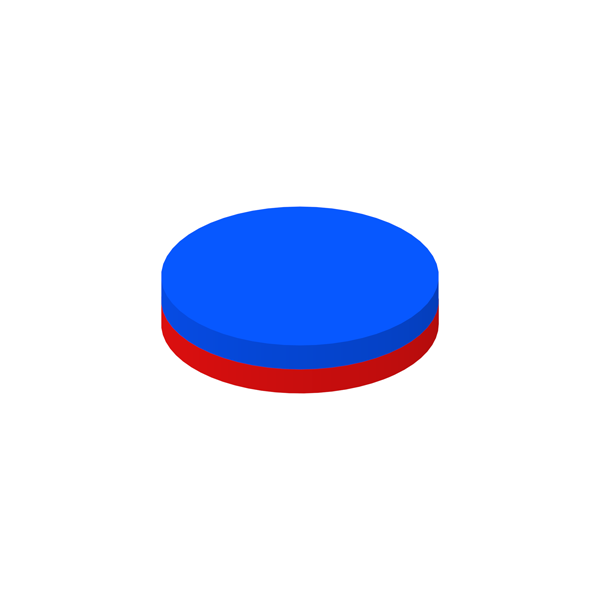

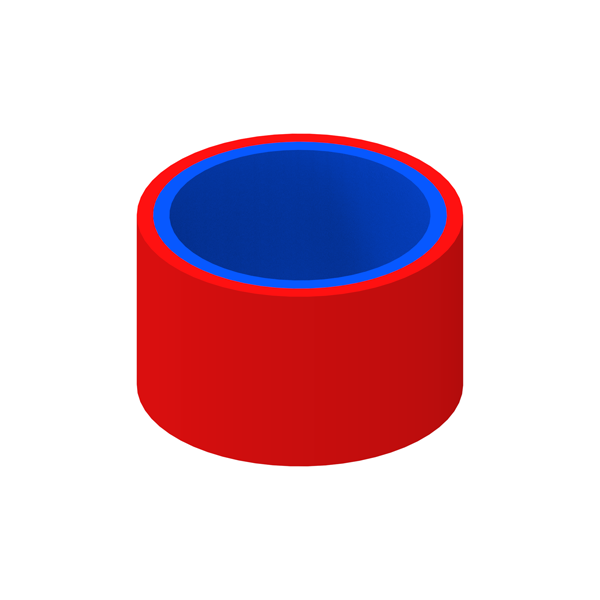
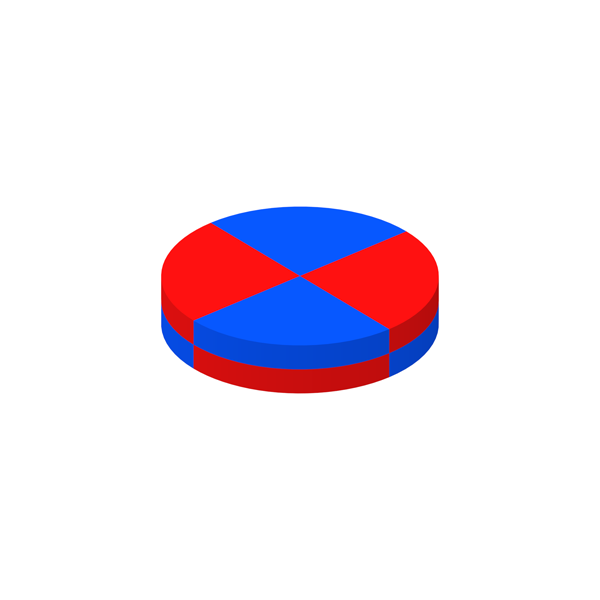
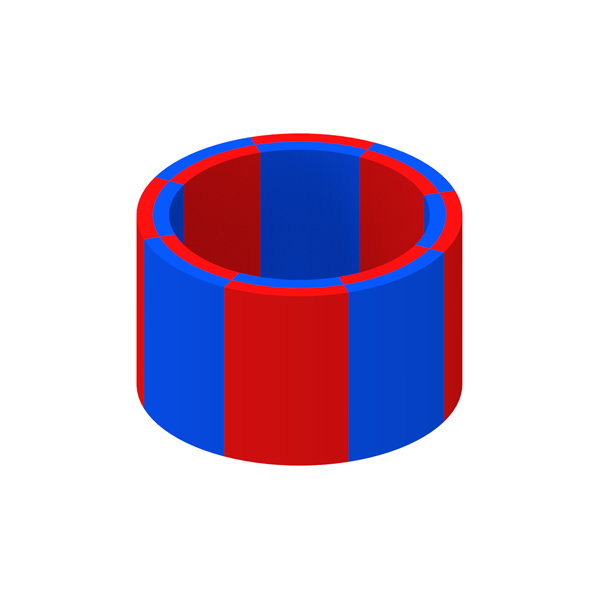
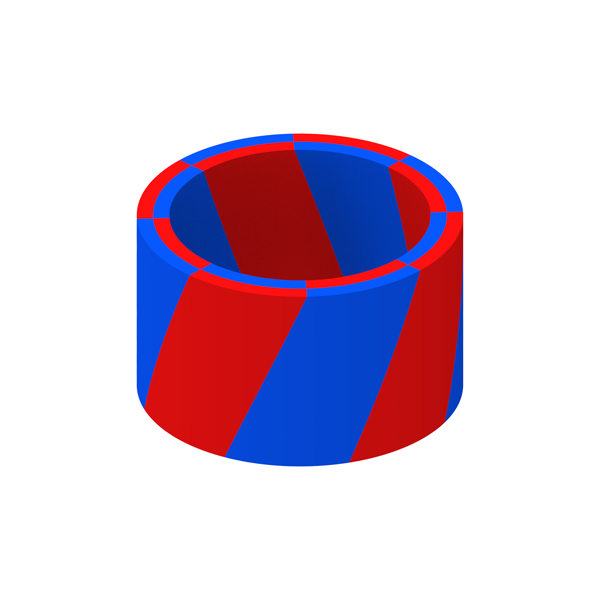
Skewed and multipole patterns cut cogging and shape the flux in motor magnets. Both need a dedicated fixture, so they carry a longer lead time.
Bare NdFeB oxidises quickly, so every part ships coated. Nickel-copper-nickel is the default for indoor use and gives a bright, solderable surface.
Epoxy and Everlube are chosen for salt spray, humidity and automotive exposure. Zinc suits cost-sensitive parts that stay dry.
Coating thickness is counted in the final tolerance, so specify plating before the drawing is released.
See Coating Testing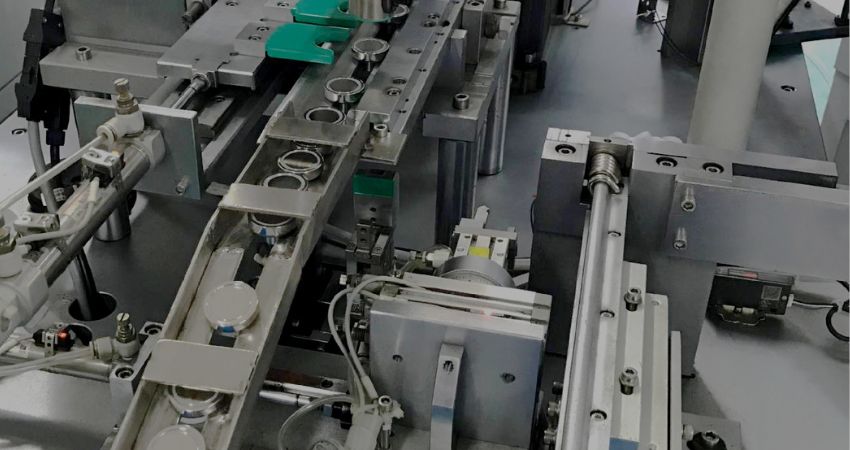
Plating runs in line with machining, so a part never leaves the plant between steps.
The same grade behaves differently once it is built into a housing, a rotor or a fixture. These are the four applications we quote most often.

Arc and ring segments for PMSM, BLDC and servo rotors, supplied to grade and to flux.

Small discs and blocks for Hall effect, speed and position sensing in tight assemblies.

Blocks and pots for workholding, magnetic chucks and quick-change fixture plates.

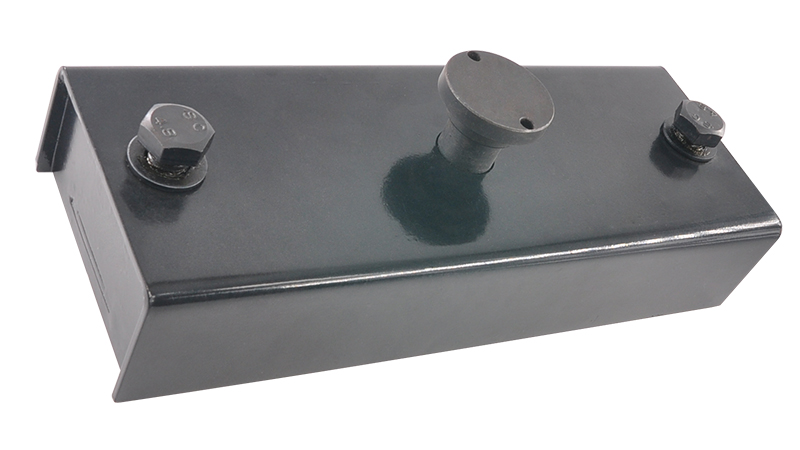
Magnets bonded into steel housings, with thread, plating and pull force tested per lot.
For holding work, compare a bare block against a pot magnet: the steel cup redirects flux to one face and roughly doubles the usable pull.
Buying from neodymium magnet manufacturers means buying a process, not just a grade stamp. Four checks decide whether a lot will behave the same way in month twelve.
Powder, pressing and sintering are not outsourced, so grade drift is caught at the furnace.
Flux, pull force and coating thickness are recorded per batch and shipped with the report.
Grinding is measured against the drawing, not against a catalogue nominal.
Raw material is booked against forecast, which keeps lead time flat through price cycles.
Share shape, grade, coating and annual volume. We reply with a tolerance-checked quotation and a sample plan.







.png)