




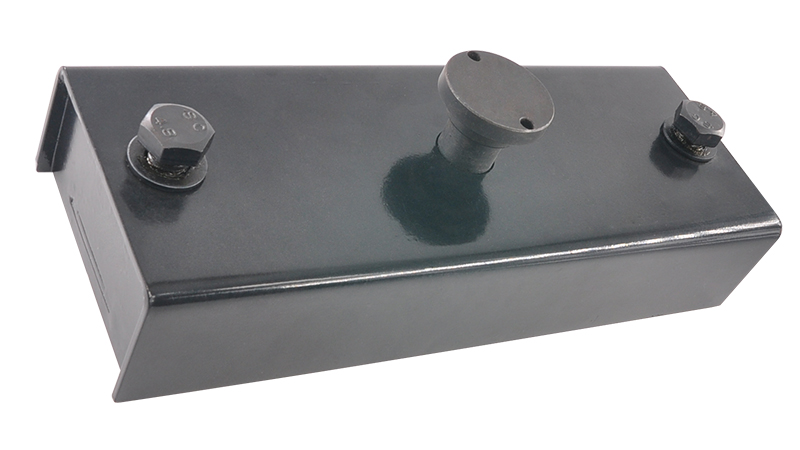
Clamp a side form to the steel pallet in under three seconds, then lift it off by hand.
A shuttering magnet replaces the bolt and the weld. Nothing is drilled into the table, so one unit serves every panel layout the plant runs.
Magnetic force replaces the bolt, so the table stays flat and the panel moves freely.
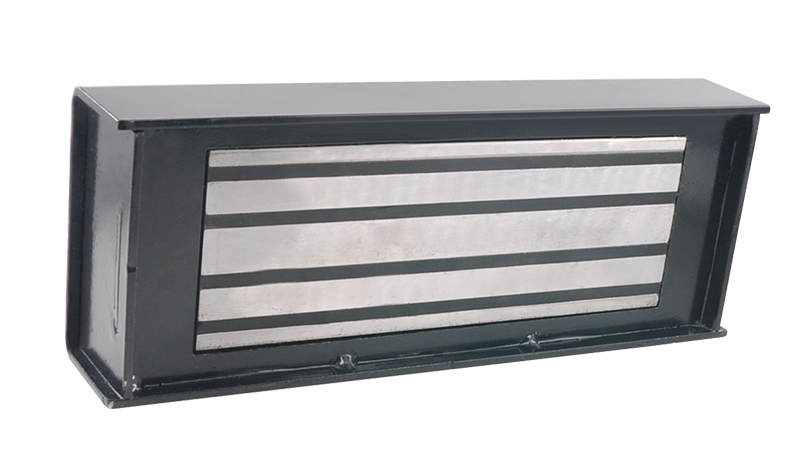
A single lever rotates the internal magnet block.
A shuttering magnet is a switchable magnetic fixture for precast concrete element factories, used to fix the side formwork onto the steel pallet.
Inside the housing, a neodymium block rotates between two positions. Turned on, the flux is shorted through the steel table and the unit locks. Turned off, the flux stays inside the housing and the unit lifts away by hand.
Because nothing is welded or bolted, the same magnet serves any panel layout. That reusability is what makes the system pay back on a plant that changes moulds weekly.
Precast Concrete Magnet RangePick by panel height and pour pressure, then confirm the adapter matches your table thickness.
| Model | Holding force | Length × Width | Height | Weight | Suggested panel |
|---|---|---|---|---|---|
| HM-MF-0900 | 900 kg / 8,800 N | 180 × 60 mm | 60 mm | 3.2 kg | Side forms up to 200 mm |
| HM-MF-1200 | 1,200 kg / 11,800 N | 200 × 60 mm | 60 mm | 3.8 kg | Side forms up to 300 mm |
| HM-MF-1500 | 1,500 kg / 14,700 N | 220 × 60 mm | 60 mm | 4.4 kg | Most wall and beam moulds |
| HM-MF-1800 | 1,800 kg / 17,600 N | 240 × 65 mm | 65 mm | 5.1 kg | Tall walls, deep beams |
| HM-MF-2100 | 2,100 kg / 20,600 N | 260 × 65 mm | 65 mm | 6.0 kg | Heavy pours, high slump |
| HM-MF-2500 | 2,500 kg / 24,500 N | 300 × 70 mm | 70 mm | 7.4 kg | Large panels, tunnel forms |
| HM-MF-3100 | 3,100 kg / 30,400 N | 330 × 75 mm | 75 mm | 9.2 kg | Precast stairs, heavy sections |
Holding force is measured on a 12 mm ground steel plate at room temperature. Design load should stay at or below one third of this value to cover vibration and release torque.
For thin panels or narrow ribs, a precast insert magnet or a magnetic chamfer often replaces the standard block.
A clean table and a full lever stroke are the two things that decide holding force.
Concrete residue and release agent film both cut holding force. Wipe the contact face before every set.
Set the side rail against the magnet adapter, then check the dimension against the panel drawing.
Push the lever fully to the on position. A partial stroke leaves flux leaking and cuts force by up to 40 %.
Turn off before lifting. Pulling a live magnet off the table wears the housing and can chip the pallet.
The magnet is one part of the fixing. These are the fittings that complete it.
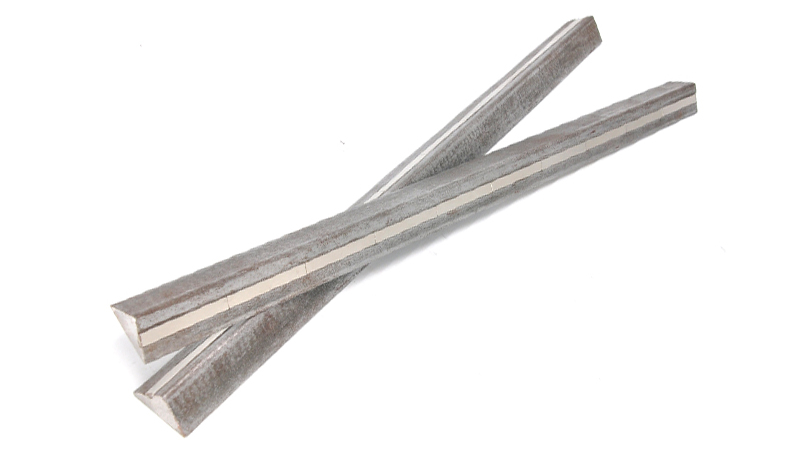
Clips to the formwork edge and holds a chamfer profile without nails.
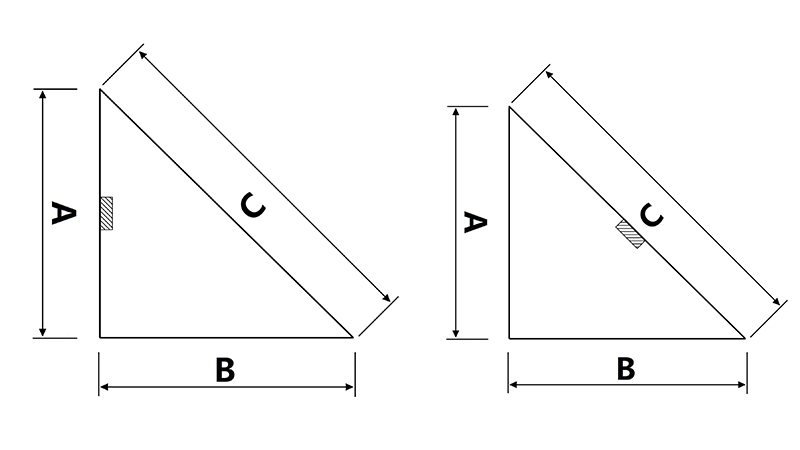
Standard 15, 20 and 25 mm profiles, cut to the panel length on site.
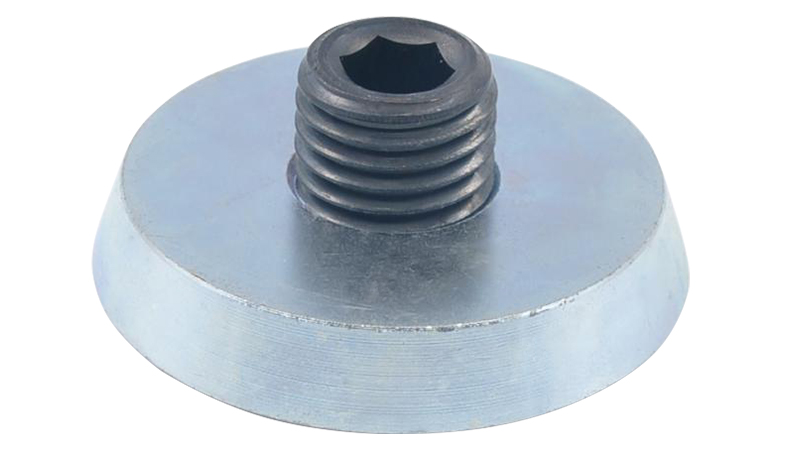
Holds lifting sockets and cast-in inserts square to the form face.

The contact face is ground flat after casting, so the magnet sits on the table instead of rocking on burrs.

Send a panel drawing and we mark magnet positions and quantities against pour pressure.

The four most-used models are held in stock, which keeps replacement units at days rather than weeks.

Adapters, levers and rubber pads are sold separately, so a worn part does not retire the whole unit.
Tell us panel size, pour height and table thickness. We reply with model, quantity and spacing.







.png)