






Horizon Magnetics is a professional neodymium pot magnet manufacturer and supplier based in Ningbo, China. Our NdFeB pot magnets are produced in five mounting styles — external thread, internal thread, through hole, countersunk and rectangular — with diameters and holding forces that vary by product design to match different load and installation requirements.
With in-house neodymium magnet production and precision machining, we supply both standard neodymium cup magnets and custom magnetic assemblies built to your drawings. Send us your diameter, thread and holding force requirements for a fast quotation.
As a vertically integrated magnet factory since 2004, Horizon controls the supply chain from NdFeB magnet production to finished assemblies and serves industrial customers worldwide. Every order is backed by consistent quality checks on dimensions, coating and magnetic performance.
Horizon offers five types of neodymium pot magnets with different housing designs and mounting interfaces. Each type is developed for specific installation requirements, allowing customers to select the right magnetic assembly for their equipment and applications.

Pot magnet with external threaded stud, also called Neodymium cup magnet with male thread, is a type of magnet that features an external threaded hole or stud on its surface. In the various product and life areas, this threaded stud allows for easy and secure attachment to various objects or surfaces using nuts, bolts, or other threaded fasteners.

For pot magnet with internal threaded stud, the special threaded bush on the steel case of the Neodymium pot magnet with internal thread enables this threaded pot magnet to be mounted by steel rings, hooks or similar objects with a screw-in bar. It is also named as Neodymium shallow pot magnet with thread hole, Neodymium cup magnet with internal thread, and Neodymium round base magnet with female thread, etc.

Through hole pot magnet is a type of shallow pot magnet assembly that features a centrally located straight hole or bore along its axis. It is also commonly known as a pot magnet with a counterbore hole. The through hole allows for convenient mounting and fastening of the cup magnet to various surfaces or objects using screws or bolts.

Neodymium rectangular pot magnet, Neodymium channel magnet, or Neodymium rectangular channel mounting magnet utilizes a strong Neodymium block magnet with holes encased inside a steel channel to meet a versatile application in holding, mounting, securing or positioning.

Countersunk pot magnet is a type of magnet that has a specially designed hole or depression on one face, which allows it to be easily attached or mounted onto surfaces using screws or bolts. Neodymium countersunk pot magnet is also called Neodymium countersunk cup magnet, Neodymium countersunk round base magnet, Neodymium countersunk mounting magnet.
A neodymium pot magnet bonds an NdFeB disc into a mild steel housing, combining the strength of rare earth magnets with mechanical protection and secure screw or bolt mounting. This is why neodymium cup magnets are the default choice for jigs, fixtures and signs.
The steel cup redirects flux that would leak sideways back to the working face, so more of the magnet’s output is available at the contact surface.
The steel housing provides mechanical protection for the brittle NdFeB magnet, while the surface coating helps improve corrosion resistance.
Threads, bores and countersinks fix the assembly with screws and bolts — no adhesive needed.
Five housing styles cover different equipment integration requirements, from nut fixing on machines to flush mounting in furniture and cabinets.
Horizon neodymium pot magnets cover a wide range of diameters, threads and holding forces, and the exact values differ from one product design to another. The table below summarizes the main specifications; each product page lists the complete technical data for its own series.
| Specification | Standard Range |
|---|---|
| Magnet Material | Sintered NdFeB, N35 – N52 |
| Housing Material | Mild steel housing with plated finish |
| Diameter | Depending on design; e.g. D10 – D75 mm (external threaded series) |
| Holding Force | Depending on design; e.g. 2 – 162 kg per piece (external threaded series) |
| Thread Options | Depending on design; e.g. M3 – M10 (external threaded styles) |
| Surface Coating | NiCuNi nickel plating; zinc on selected sizes |
| Max Operating Temperature | 80 °C standard; higher-temp grades on request |
| Magnet Shape | Disc, ring or block inside the steel housing |
Pull force is measured perpendicular to a 5 mm mild steel plate at 20 °C. Air gaps from paint, powder coat or thin sheet reduce the rating sharply — check your exact stack with the magnetic pull force calculator, or read our neodymium pot magnet selection guide for grade and housing choices.
Actual holding force varies depending on the magnet dimensions, material grade, steel plate thickness, surface flatness and air gap. For applications requiring a specific load capacity, contact Horizon Magnetics for testing and configuration recommendations.
The specified holding force represents the maximum pull-off force under defined test conditions, not the recommended working load. Actual performance depends on the mounting surface and operating environment.
Neodymium pot magnets are used in applications requiring strong, removable magnetic holding and secure mechanical mounting. Typical industrial applications include:
Pot magnets locate steel parts and toggle clamps on jigs, welding tables and machine fixtures, and release in seconds for changeovers.
Internal-thread pot magnets suspend signs, track lights and exhibition panels from steel beams without drilling.
Countersunk and through-hole pot magnets can be mechanically installed in wooden furniture, cabinet panels and metal structures to provide magnetic holding points for removable components and door catches.
Threaded pot magnets carry hooks, rings and tool holders on machine frames, containers and garage walls.
On vehicles and mobile machinery, pot magnets mount lights, cameras and antennas on steel panels without drilling. Rubber-coated pot magnets hold firmly while protecting the painted surface.
Beyond the standard range, Horizon engineers custom neodymium pot magnets for OEM projects. Customization covers:
Ningbo Horizon Magnetic Technologies Co., Ltd. has manufactured sintered NdFeB magnets since 2004 and is vertically integrated from magnet production to finished magnetic assemblies. Pot magnet housings are manufactured through in-house stamping and machining processes, and the NdFeB magnets are assembled into the housings according to the required specifications, with quality checks covering dimensions, assembly and magnetic performance.

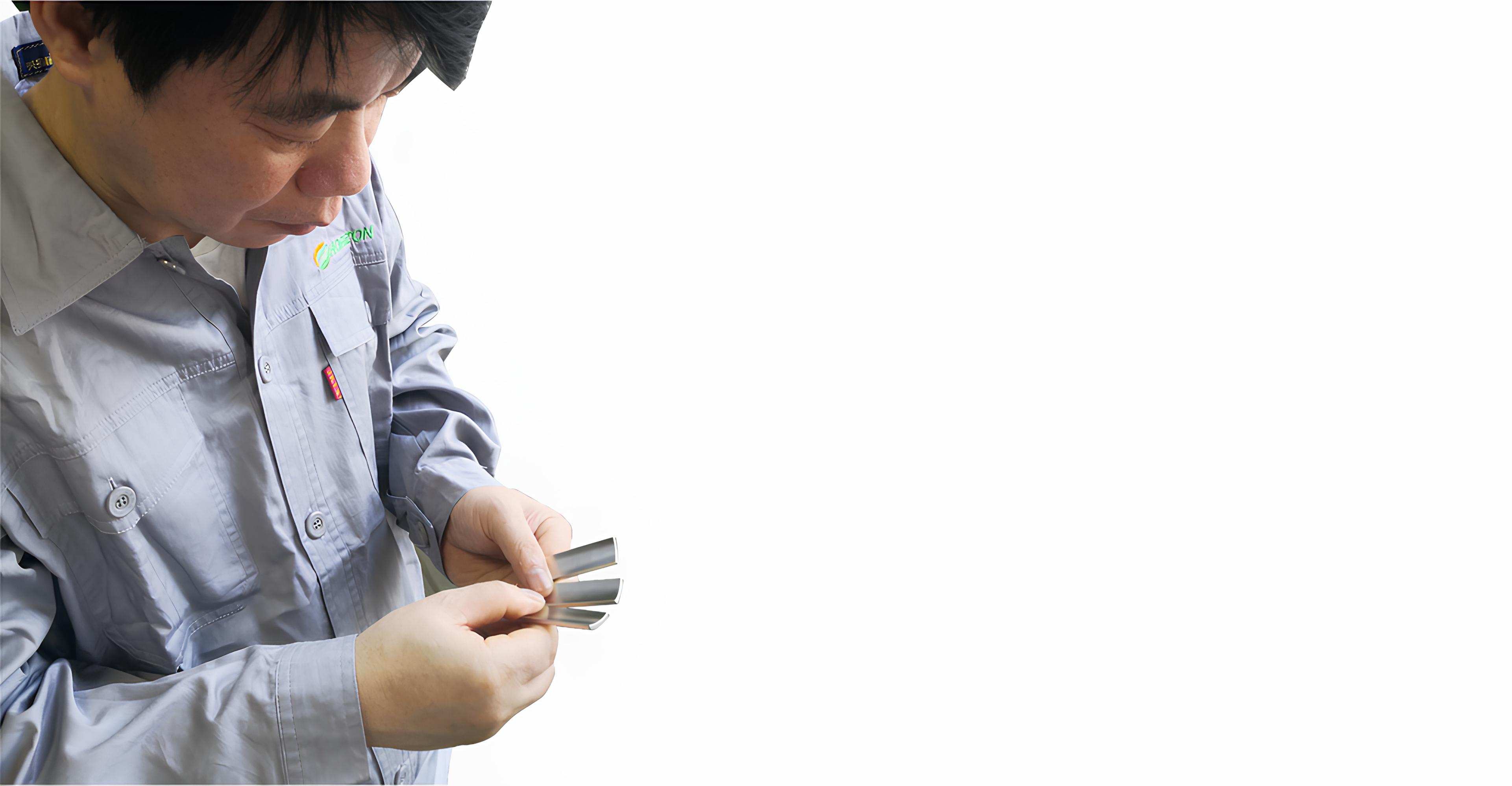
Our magnet engineers have over 20 years of experience in magnetics. Millions of semi-finished and finished magnetic products in stock support short lead times and a stable supply, from single prototypes to volume orders.
As a vertically integrated magnet manufacturer, Horizon supplies rare earth magnets and magnetic assemblies to well-known industrial customers in Europe, North America and Asia. This production depth is what keeps quality, lead time and cost under control for every pot magnet order.
On a steel surface, generally yes. Because the steel housing makes more of the magnet’s output available at the contact face, a pot magnet of similar dimensions typically provides greater effective holding force than a bare magnet. Choose a pot magnet when you also need mechanical mounting and surface protection; bare magnets remain the better choice inside sealed assemblies.
Catalogue holding force is usually measured under controlled conditions on a thick, flat steel plate with direct contact. Paint, coatings, air gaps, surface irregularities and thinner steel sheets can significantly reduce actual holding force. Check the testing conditions before comparing different products.
External threaded pot magnets are suitable for nut-based mounting, while internal threaded designs accept bolts and accessories. Through-hole pot magnets allow screws or bolts to pass through the center, and countersunk designs accommodate flat-head screws for flush installation. Choose according to your equipment structure and mounting space.
Neodymium pot magnets generally work on ferromagnetic materials such as carbon steel and iron. Most austenitic stainless steels, including common 304 and 316 grades, are not strongly magnetic and provide little or no holding force. Check the magnetic properties of the target surface before selecting a pot magnet.
Yes. Horizon Magnetics provides custom neodymium pot magnets based on drawings, samples and application requirements. Custom options can include magnet dimensions, material grade, steel housing, mounting threads, surface treatments and target holding force. Contact our team to discuss prototype development and volume production.
Yes. Standard neodymium pot magnets can be shipped directly from stock, while custom designs move into sample production after the drawing and specifications are confirmed. Send your requirements to arrange samples and discuss the next steps.
Pot magnets are generally safe, but keep them away from pacemakers, magnetic cards and precision instruments. The strong pull can pinch fingers or damage sensitive surfaces, so store magnets with spacers between them and handle larger sizes with care.
Send diameter, thread and pull target. We confirm the closest housing or quote a new one.
Contact Us Now






.png)