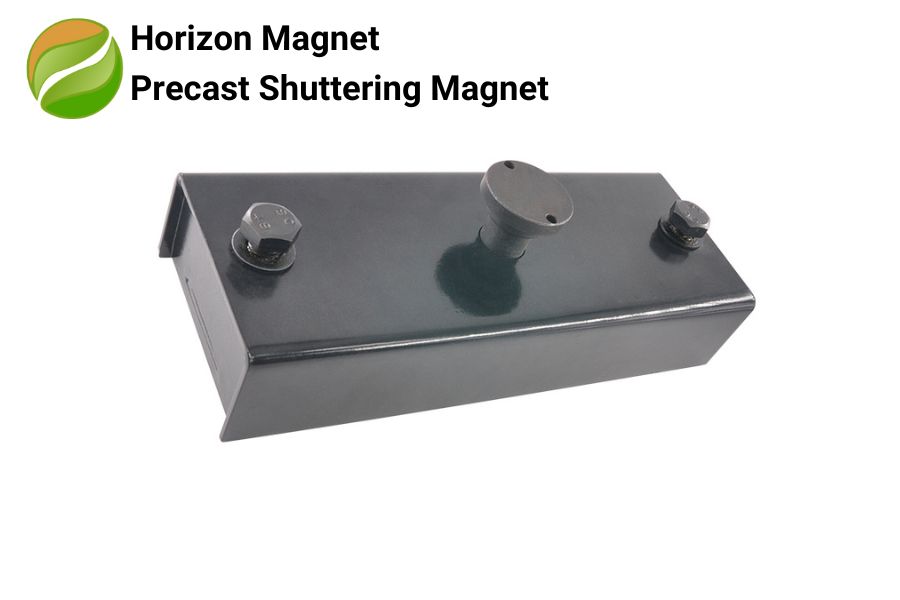





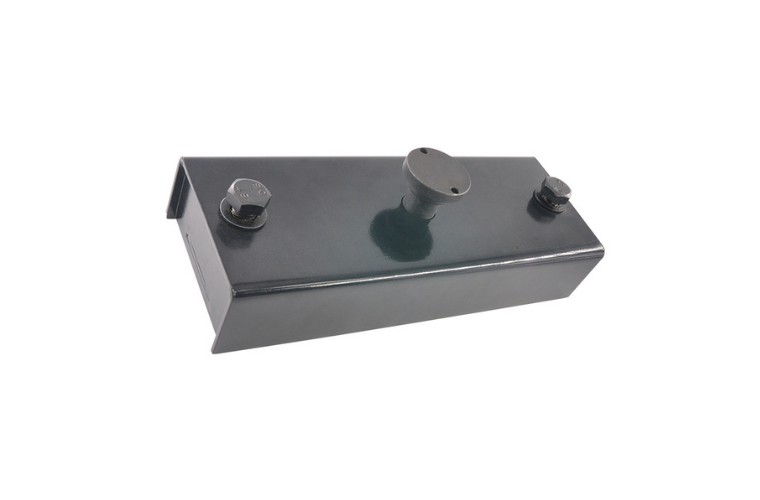
A shuttering magnet is a specialized industrial tool designed specifically for use in concrete construction. In the precast concrete industry, efficiency, precision, and cost control are the core elements that enable enterprises to maintain their competitiveness; consequently, the shuttering magnet is undoubtedly one of the most critical auxiliary tools available.
This complete guide covers everything you need to know—from working principles to applications, advantages, and how to choose the right Shuttering Magnet manufacturer.
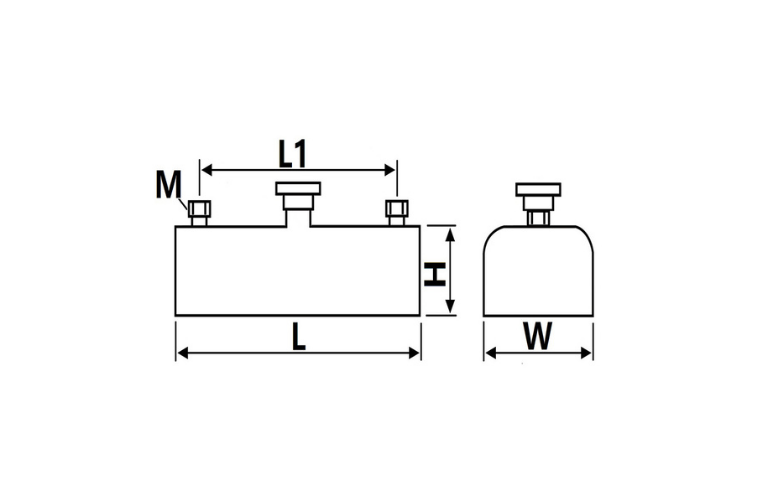
A precast shuttering magnet is a switchable permanent magnet assembly designed to fix steel or wooden side forms — known as shuttering or formwork — firmly onto a steel casting bed during the production of precast concrete elements.
Unlike traditional fixing methods such as welding, bolting, or clamping, a shuttering magnet uses powerful neodymium magnets to generate strong, controlled holding force. The key advantage is the on/off mechanism: the holding force can be activated and released quickly without tools, without damaging the casting table, and without requiring a power supply to maintain the grip.
This makes shuttering magnets a standard tool in any professional precast production environment — from automated carousel systems producing hundreds of panels per day to smaller batch operations making custom architectural elements.
• High magnetic holding force ranging from 450 kg to 3,000 kg or more depending on unit size
• Fast setup and release — a single button press activates or deactivates the holding force
• No drilling, welding, or permanent modifications to the casting table
• Reusable across thousands of production cycles with proper maintenance
• Compatible with steel, wooden, and aluminum formwork through adapter systems
The operating principle is based on a switchable magnetic circuit. Inside the steel housing sits a block of high-grade neodymium-iron-boron (NdFeB) magnets — the same rare-earth material used in electric motors and wind turbines. These magnets are embedded within a precisely engineered steel circuit that controls where the magnetic flux travels.
In the off position, the internal magnets are oriented so that their flux loops entirely within the housing itself. The external face shows near-zero magnetic field, and the unit can be positioned freely on the steel table without resistance.
When the activation button or lever is pressed, the magnet block rotates 90 degrees (or shifts laterally in some designs). This redirects the flux outward through the bottom contact face, through the steel casting table, and back through a second contact point on the housing — completing a powerful external magnetic circuit that grips the table with several hundred to several thousand kilograms of holding force.
Pressing the button again reverses the rotation, the external circuit collapses, and the force drops to near zero. No electricity, no hydraulics, no special tools required.
1. Position the shuttering magnet on the steel casting bed at the desired location
2. Thread or clip the adapter to connect the magnet to the formwork side rail
3. Press the activation button or lever — the magnetic circuit engages and the unit locks to the table
4. The formwork is now held firmly in position during concrete pouring, vibration, and curing
5. After the concrete has cured and the element is stripped, press the button to deactivate
6. Lift the magnet cleanly off the table and clean the contact face before the next pour
A high-quality shuttering magnet is more than a block of neodymium in a steel box. Each component in the assembly plays a specific role in performance, durability, and ease of use — and the quality of each component is directly reflected in how the magnet performs in production conditions.
|
Component |
Specification (quality units) |
Role in performance |
|
Neodymium magnetic core |
Sintered NdFeB, grade N35–N45+ |
Primary source of holding force; determines maximum flux output |
|
Steel housing |
Carbon steel Q235 or stainless SUS304 |
Completes the magnetic circuit; mechanical protection of core |
|
Activation mechanism |
Push-button or lever; mechanical linkage |
Rotates or shifts the magnet block; the life-limiting component |
|
Contact face |
Ground flat to ≤0.05 mm tolerance |
Transfers flux to table; flatness directly affects holding force |
|
Adapter interface |
Threaded inserts M12 / M16 / M20 |
Connects magnet to formwork rail systems |
|
Sealing / IP rating |
IP65 minimum for production environments |
Prevents concrete slurry intrusion into switch mechanism |
When evaluating shuttering magnet suppliers, ask specifically about the contact face flatness tolerance and the sealing specification. These two details separate magnets designed for real precast production environments from units built to a lower standard.
Shuttering magnets, essential for precast concrete production, include push-button magnets, magnetic side rails (U-profiles), and adjustable combination magnets. They offer quick, secure fixation for formwork on steel tables, ranging from 450kg to 2500kg+ in force, featuring, for example, neodymium magnets to boost efficiency and prevent mold damage.
Push-Button Magnets: Activated by pressing a button on top, these are commonly used for securing side forms. They can reach holding forces of 2100kg or higher, often with specialized jaw-type connections.
Magnetic Side Rails / U-Profiles: These are integrated steel profiles, that feature integrated magnets, allowing for quick positioning of edge formwork for walls or beams.
Combination Magnets: These combine magnetic force with bolts or clamps, offering additional stability and versatility for complex formwork setups.
Chamfer Magnets / Magnetic Chamfer Strips: Used specifically to create beveled edges (chamfers) on concrete corners, available in triangular or trapezoid shapes.
Threaded Fixing Magnets: Specially designed to hold inserts such as threaded tubes or lifting anchors in place within the mold.
Electrical Box Magnets: Used to fasten junction boxes and electrical fixtures within the concrete, ensuring they remain secure during pouring.
Side Suction Magnets: Designed for vertical or lateral force application.
Flat Suction Magnets: Used for, for example, flat,, downward-pulling force applications on horizontal tables.
High-Temperature Magnets: Engineered to withstand higher temperatures, typically or more.
These Shuttering Magnets enhance efficiency compared to traditional bolting or welding, allowing for faster setup and easy dismantling.
In actual projects, shuttering magnets are used in far more situations than just fixing standard formwork. Their flexibility is what makes them a practical tool on both construction sites and in precast production environments.
Here are some of the most common ways they are used in day-to-day work:
The most typical use is fixing formwork panels in place—whether for walls, columns, or slab edges.
Once positioned on a steel casting bed, the magnet holds the formwork firmly, helping maintain alignment during pouring. This is especially important when dealing with wet concrete pressure, which can easily cause panels to shift or deform.
At corners or connection points, magnets are often used to keep joints tight without additional drilling or welding, making adjustments much easier on site.
Shuttering magnets are also widely used to hold smaller components before concrete is poured.
On many projects, they are used to position conduits, anchor bolts, or embedded sleeves so that everything stays exactly where it should be. In some cases, they’re also used to temporarily fix vibration equipment or monitoring devices during the casting process.
Because they can be repositioned quickly, they’re often used as a flexible alternative to clamps or temporary fixtures.
In larger pours—such as thick walls or deep structural elements—formwork is exposed to significant pressure.
Magnets can be added in key areas to provide extra support, helping prevent issues like bulging or even blowouts. They’re also useful as temporary lateral supports when formwork needs additional stability during setup or pouring.
In practice, having a few extra units available often makes a noticeable difference in handling these situations.
For projects involving curved walls, arches, or non-standard shapes, traditional fixing methods can be time-consuming.
Shuttering magnets make it easier to secure flexible or specially shaped formwork without permanent fixing. This allows for quicker adjustments, which is especially helpful in projects where precision and adaptability are required.
One of the biggest advantages is how much time they save.
Compared to bolting or welding, magnets allow crews to set up and remove formwork much faster. This becomes particularly valuable in projects with tight schedules or repetitive production processes.
In precast plants, where efficiency directly affects output, this benefit is even more noticeable.
Beyond formwork itself, magnets are often used for smaller, temporary tasks.
They can serve as quick mounting points for tools, laser levels, or other equipment that needs to be positioned during construction. Instead of drilling into surfaces or using makeshift solutions, magnets offer a simple and reusable option.
In precast environments, shuttering magnets are part of daily operations.
They are used to assemble molds, fix side rails, and hold embedded parts in place without damaging the casting bed. Because production is repetitive, consistency and ease of use are especially important here.
This is also where product quality becomes more noticeable over time, as reliable magnets perform consistently across repeated cycles.
Shuttering magnets can also be useful during repair work or unexpected situations.
They can be used to hold small temporary forms in place when patching damaged concrete, or to stabilize sections of formwork if adjustments are needed during pouring. In these cases, having a quick, non-permanent fixing method can save both time and effort.
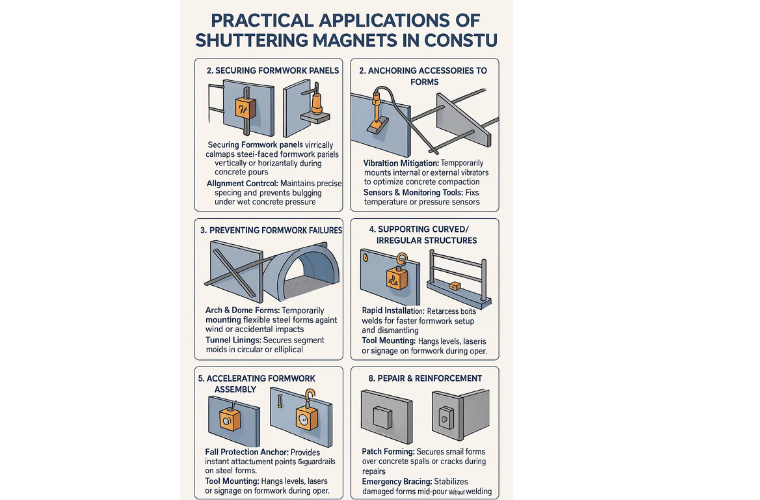
In practice, shuttering magnets are less about a single function and more about versatility. From standard formwork fixing to temporary adjustments on site, they offer a simple way to solve a wide range of problems without slowing down the workflow.
That flexibility is exactly why they’ve become a standard tool in modern concrete construction.
Compared to traditional fixing methods — welding, bolting, and mechanical clamping — shuttering magnets offer a set of advantages that have made them the preferred solution for modern precast production. Here is how the difference plays out in practice.
No drilling, no tack-welding, no torque wrenches. Activating a shuttering magnet takes one second. Setting an entire mold configuration takes minutes rather than the better part of an hour. For plants running tight production schedules, this is not a minor convenience — it directly increases the number of elements that can be produced per day per table.
The initial investment in shuttering magnets is higher than buying a set of bolts and clamps. Over time, however, the economics shift decisively. Quality magnets last 10,000 to 50,000 activation cycles, require minimal consumables, and eliminate the labor, table repair costs, and production downtime associated with mechanical fixing. For high-volume plants, the return on investment is typically achieved within one to two years.
Drilling and welding leave permanent marks on precision steel tables — marks that accumulate over time and create surface defects that transfer to finished concrete elements. Shuttering magnets leave no marks, preserving the table surface and the quality of every element produced on it. This is particularly important for architectural precast, where surface finish is part of the product specification.
Bolted fixing is constrained by pre-drilled hole patterns. Shuttering magnets can be positioned anywhere on the steel table surface, allowing mold configurations to be changed freely without any modification to the table. This is a significant advantage for plants producing a variety of element geometries or running bespoke architectural commissions.
Heavy mechanical clamps, hammers, and welding equipment carry inherent risks. Shuttering magnets reduce the physical demands and the hazard profile of mold-setting operations. The primary safety consideration with magnets is the crushing force when an active magnet snaps onto a ferromagnetic surface — a hazard that is well managed through proper training and handling procedures.
The market ranges from precision-engineered European units to cost-optimized options from Chinese manufacturers — and within each category, there is significant variation in quality. Here are the specific factors that should guide your selection decision.
This is the most consequential decision and the most commonly mishandled one. Underspecified magnets allow formwork to shift during vibration, causing dimensional defects and surface defects that can fail quality inspection. As a general reference:
|
Application |
Element thickness |
Recommended force per unit |
Typical magnet spacing |
|
Thin wall panels / facade |
Up to 150 mm |
600–1,000 kg |
600–800 mm |
|
Standard wall panels |
150–250 mm |
1,000–1,350 kg |
500–700 mm |
|
Heavy panels / double walls |
250–400 mm |
1,350–1,800 kg |
400–600 mm |
|
Structural beams and columns |
300 mm+ |
1,800–2,500 kg |
300–500 mm |
|
Vibrating table (add to above) |
Any |
+30–50% vs fixed table |
Reduce spacing by 20% |
Two magnets can show identical holding force ratings in a brochure and perform very differently in production. The factors that separate them are: NdFeB magnet grade (N35 minimum, N42+ for demanding applications), contact face flatness tolerance (specify ≤0.05 mm), housing wall thickness for vibration resistance (minimum 8 mm on the contact face for vibrating tables), and IP sealing rating (IP65 minimum in wet production environments).
Standard off-the-shelf magnets work for standard formwork systems. If your production involves non-standard rail profiles, unusual mold geometries, or integration with an automated production line, you need a manufacturer capable of engineering custom adapter systems and modified housings to your drawings. Confirm this capability before committing to a supplier.
For a large precast plant outfitting multiple casting tables, you may need hundreds or thousands of units. A manufacturer with sufficient production capacity and inventory depth to supply consistently — and to respond when replacement units are needed on short notice — is worth a premium over a lower-cost supplier who cannot guarantee delivery timelines.
The best shuttering magnet suppliers do not just ship boxes. They review your casting table drawings and vibration parameters, recommend the appropriate force specification and spacing, and provide technical support when problems arise. This kind of application engineering support is particularly valuable when specifying a new production line or troubleshooting quality issues on an existing one.
Choosing the right shuttering magnet manufacturer is as important as choosing the right specification. The shuttering magnet market is dominated by a handful of European engineering companies — who pioneered the technology — and a growing number of Chinese manufacturers who have brought competitive pricing and strong export capabilities to the category. Here are five globally recognized names.
RATEC is a Germany-based shuttering magnet and formwork system manufacturer with nearly 30 years of experience in precast concrete production. The company has played a decisive role in establishing magnetic formwork technology as the industry standard in precast plants worldwide. Ratec With in-house magnet production and complete vertical manufacturing at its Hockenheim facility, RATEC controls every stage from magnetic core fabrication to finished formwork systems.
Business Type: Shuttering Magnet & Formwork System Manufacturer
Location: Germany
Founded: 1974
Business Scope:
Switchable Shuttering Magnets (SPB Standard Pro Magnetic Box, KPB Klacker Power Box, EURO RTM series)
Modular Siderail & Formwork Systems (SAS Standard Automatic Shuttering, MST Universal Plywood Beam, PSV Pro System Vario)
Casting Tables, Tilting Tables & Battery Molds
Recess & Blockout Solutions
Custom Magnetic Cores & Adapter Systems
Robot-Compatible Formwork Solutions for Automated Production Lines
Introduction:
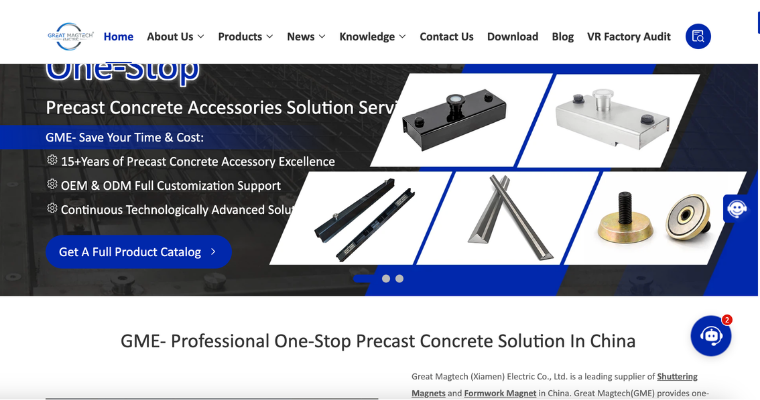
GreatMagtech (GME) is a professional manufacturer specializing in shuttering magnets, precast concrete formwork systems, and various precast concrete accessories. The company operates its own factory with fully integrated production capabilities, including CNC machining of magnet cores, steel housings, stainless-steel button processing, and complete assembly. With strong export capability and strict quality control, GME's magnetic systems are now supplied to more than 100 countries and regions worldwide.
Type of Business: Manufacturer of shuttering magnets & precast concrete accessories (OEM/ODM available)
Location: China
Established: 2015
Main Products:
450KG – 3000KG shuttering magnets
Magnetic formwork systems
Concrete chamfer
Lifting System For Precast Concrete Unit
Other precast concrete accessories (lifting clutch, rebar tying wire, concrete fiber, and more)
Elematic Oyj is a global leader in precast concrete technology with over 65 years of experience, supplying machinery, equipment, automation solutions, and services to precast producers in more than 100 countries across 4,000+ project deliveries. Elematic Its FaMe magnet shuttering system is a patented modular solution that integrates push-button magnets with aluminum side profiles for fast, precise mold preparation.
Business Type: Precast Concrete Technology & Equipment Manufacturer (including integrated magnetic shuttering systems)
Location: Finland
Founded: 1959
Business Scope:
FaMe Magnet Shuttering Systems (FaMe Flex Pro, FaMe Lite, FaMe Hot series)
Hollow-Core Slab Production Lines & Extruders
Automated Wall Panel & Double Wall Production Systems
Carousel-Based Automated Production Lines
Batching, Mixing & Concrete Distribution Systems
Acotec Partition Wall Technology
Precast Plant Software & Production Automation
Turnkey Factory Engineering & Complete Plant Delivery

Introduction
BT-Innovation focuses on providing innovative magnetic formwork solutions for the construction and prefabrication industries. The company offers advanced magnetic systems that integrate seamlessly with modular production lines.
Business Type: Formwork System Manufacturer
Location: Germany
Founded: 1991
Business Scope:
Magnetic Formwork Systems
Modular Construction Technology
Prefabricated Formwork Solutions
Custom Magnetic Systems for Large Projects

Ningbo Horizon Magnetic Technologies Co., Ltd. is a vertically integrated manufacturer of rare earth neodymium magnets and magnetic assemblies, founded in 2011 by a professional team with deep expertise in the magnet field. Horizonmagnets Specializing in precast concrete magnets and motor magnets, the company exports over 85% of its output to Europe, North America, and Asia, with full in-house control from NdFeB core production to finished shuttering magnets.
Business Type: Vertically Integrated Rare Earth Magnet & Precast Concrete Magnet Manufacturer
Location: China
Founded: 2011
Business Scope:
Shuttering Magnets / Precast Concrete Magnets (450 kg–3,000 kg full range)
Magnetic Chamfer Strips (triangular and trapezoidal profiles)
Insert Fixing Magnets & Bushing Magnets (embedded part positioning)
Sintered Neodymium (NdFeB) Magnets (all shapes, grades, and surface treatments)
Samarium Cobalt (SmCo) Magnets
Motor Magnets (servo, linear, traction, and compressor motors)
Custom Magnetic Assemblies (pot magnets, fishing magnets, rubber-coated magnets)
OEM/ODM Custom Engineering (prototype to mass production)
Reasons for Recommendation:
As one of China's leading shuttering magnet manufacturers, Horizon offers full in-house production capabilities, stable magnetic performance, and strong customization support, along with extensive export experience.
Their comprehensive range of precast concrete accessories allows Horizon to provide one-stop solutions suitable for precast plants, automated wall panel production lines, and international brands seeking reliable and consistent magnetic systems.
Most problems encountered with shuttering magnets in production are avoidable. They fall into a small number of recurring categories.
The most frequent and most consequential mistake. Buyers compare unit prices rather than calculating the actual force required for their element geometry, table type, and vibration parameters. The result is formwork movement during production, dimensional defects, and potential quality failures. Always size to the application, not to the budget.
A dirty or damaged contact surface is the most common cause of underperformance in the field. Concrete residue, surface rust, burrs from previous mechanical fixing methods, and table warping all reduce effective magnetic contact area. Establish a cleaning protocol and enforce it consistently — it is the single highest-return maintenance action.
The shuttering magnet market includes a significant number of suppliers offering units that look identical externally but use lower-grade NdFeB cores, thin-wall housings, and unsealed switch mechanisms. These units may perform adequately initially but typically fail within 1,000–3,000 cycles in production conditions. Before committing to a supplier, request material specifications, cycle life test data, and references from comparable precast operations.
Sealing against concrete slurry intrusion, switch mechanism robustness, and housing material choice in corrosive environments are not premium features — they are the difference between a magnet that lasts a production season and one that remains in service for a decade. The cost of replacement magnets and associated downtime typically exceeds the price differential between quality tiers within the first two years.
Shuttering magnets do not require complex maintenance routines, but they do require consistent basic care. The practices below extend service life significantly and prevent the gradual performance degradation that is often wrongly attributed to magnet quality rather than maintenance neglect.
• Inspect the contact face for concrete residue, rust, or mechanical damage and clean thoroughly — even a thin layer of dried cement paste reduces holding force meaningfully
• Verify the casting table surface in the contact area is clean and free of burrs or weld splatter from previous operations
• Test the activation button or lever — it should engage and release with a clean, defined action and no sticking
• Do not slide an activated magnet laterally along the table — the friction damages the contact face and creates surface irregularities that compound over time
• For long rails, stagger the activation direction of adjacent magnets to distribute lateral loads evenly during vibration
• Keep magnets at least 100–150 mm apart to prevent mutual interference reducing effective holding force
• Always deactivate before attempting to lift — pulling an active magnet upward off a steel table is the leading cause of switch mechanism damage
• Clean the contact face immediately after stripping, before concrete residue has hardened
• Store deactivated, in dry conditions, away from loose ferromagnetic tooling that could snap onto the contact face
• Check contact face flatness every 3–6 months in high-cycle operations — surface wear can develop gradually and is not always obvious visually
• Inspect switch mechanism for signs of concrete ingress, corrosion, or stiff action that indicates wear
• Track cycle counts where possible — quality manufacturers provide guidance on switch servicing intervals based on measured cycle life data
Shuttering magnets have become an indispensable tool in modern precast concrete production — replacing time-consuming welding and bolting with a faster, cleaner, and more flexible fixing method that pays for itself within the first production season.
Choosing the right shuttering magnet comes down to three things: matching the holding force to your specific element type and table conditions, sourcing from a manufacturer who controls the quality of the magnetic core itself, and ensuring the unit is built to withstand the realities of a production environment — concrete slurry, vibration, and thousands of activation cycles.
At Horizon Magnetics, we manufacture shuttering magnets from the ground up. As a vertically integrated NdFeB magnet producer based in Ningbo, China, we control every stage of production — from raw magnetic core fabrication to finished, tested shuttering magnet assemblies. That means consistent holding force, reliable sealing, and engineering support that goes beyond simply shipping a box.
Explore Our Shuttering Magnet Range
Whether you are equipping a new production line or replacing aging units on existing tables, our team can help you identify the right specification for your application.
https://www.horizonmagnet.com/precast-shuttering-magnet/ — 450 kg to 3,000 kg holding force, standard and custom sizes
Ready to Optimize Your Production Line?
Every precast operation is different. Tell us about your casting table type, element geometry, and vibration parameters — and our engineering team will recommend the right shuttering magnet specification for your setup.
Contact Horizon Magnetics today for a personalized consultation and quote.

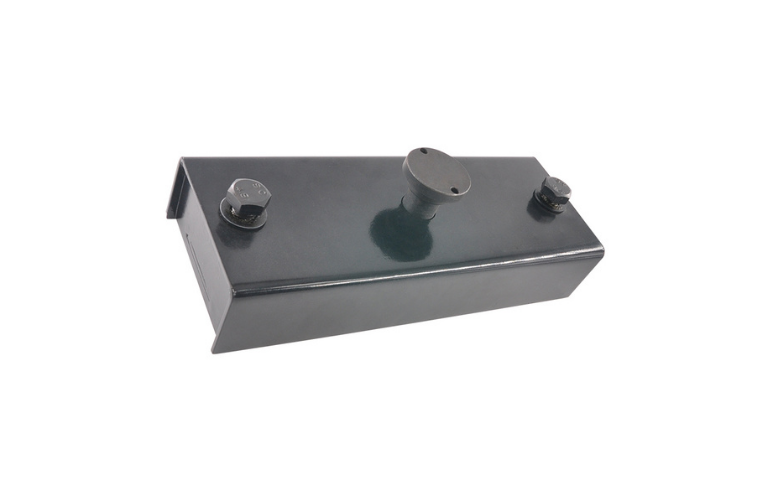
A shuttering magnet is a specialized industrial tool designed specifically for use in concrete construction. In the precast concrete industry, efficiency, precision, and cost control are the core elements that enable enterprises to maintain their competitiveness; consequently, the shuttering magnet is undoubtedly one of the most critical auxiliary tools available.

Discover the Top 10 China Magnet Manufacturers in 2026! Explore leading suppliers, their specialties, and find the perfect partner for your magnetic material needs.
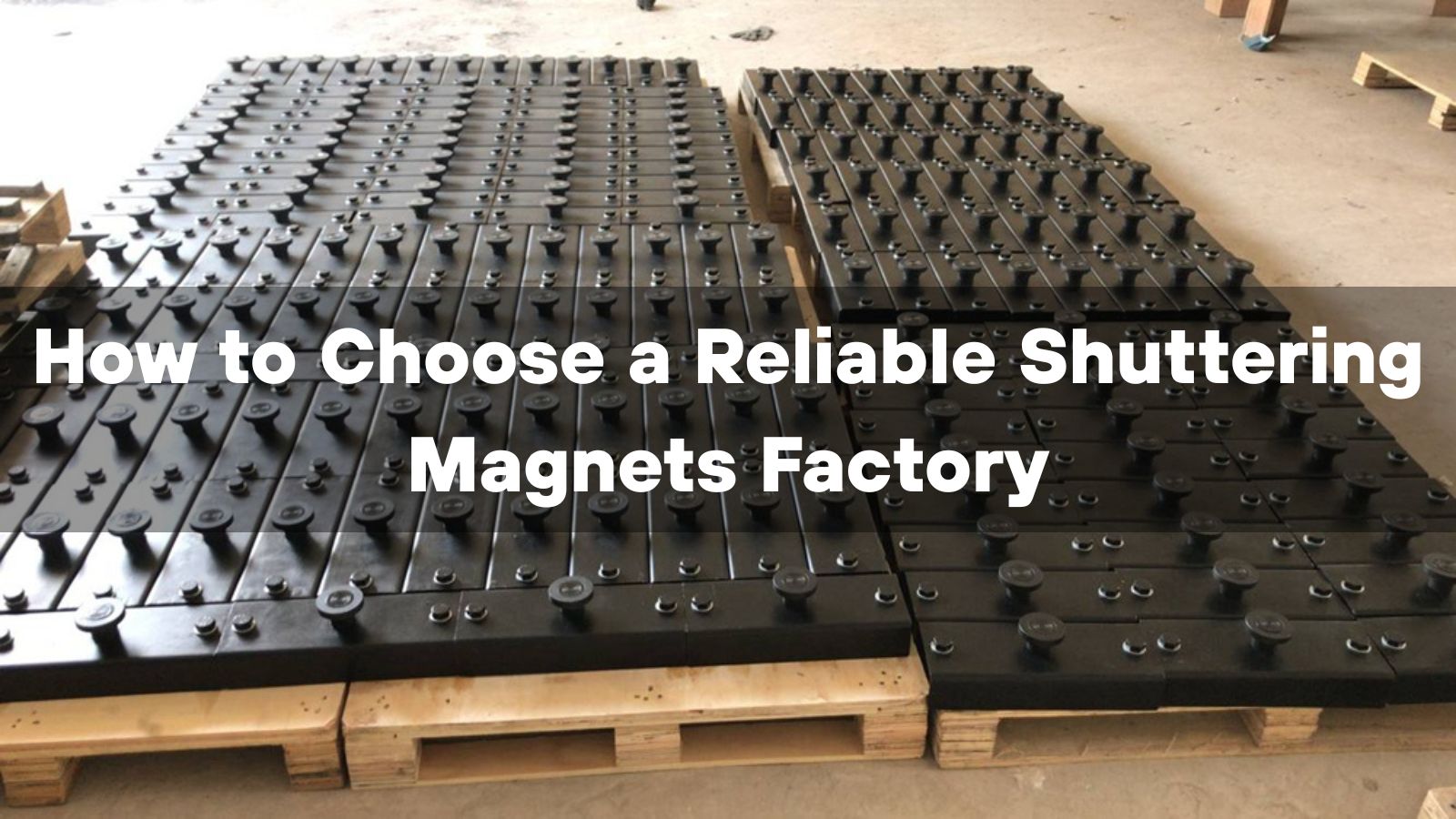
Learn how to choose a reliable shuttering magnets factory for precast concrete projects. Compare manufacturers, quality factors, certifications, and common buyer mistakes.







.png)
.png)