




In precast concrete production, manufacturers rely on accurate formwork positioning to maintain consistent dimensions and production efficiency. Magnetic fixing has become a practical solution for securing temporary formwork, inserts, and other components during concrete casting.
For international buyers, China is an important sourcing market for precast concrete magnets. Manufacturers offer standard magnetic assemblies as well as customized solutions for different formwork systems. However, choosing a supplier should involve more than comparing product prices or nominal holding force.
The right China precast concrete magnet needs to match the application, formwork dimensions, steel surface, operating temperature, and production conditions. Supplier capabilities are equally important, particularly when the buyer requires customized designs, samples, quality verification, or repeat production.
This guide explains what global buyers should know before sourcing precast concrete magnets from China, from product types and specifications to supplier evaluation, sample testing, and bulk ordering.
Table of Contents
A precast concrete magnet is a magnetic fixing assembly used to hold formwork or embedded components in position during precast concrete production.
Instead of permanently attaching formwork to a casting table through welding or drilling, the magnetic assembly can be positioned on a suitable steel surface and released after the casting process. This makes it useful for production environments where formwork layouts need to be changed or reused.
Typical applications include:
The term China precast concrete magnet generally describes these products when they are sourced from Chinese manufacturers or suppliers.
Magnetic fixing can provide several practical advantages:
However, these benefits depend on using a magnet that is correctly matched to the application. A product with a high nominal holding force may still be unsuitable if its dimensions, temperature rating, or mounting interface do not fit the production system.
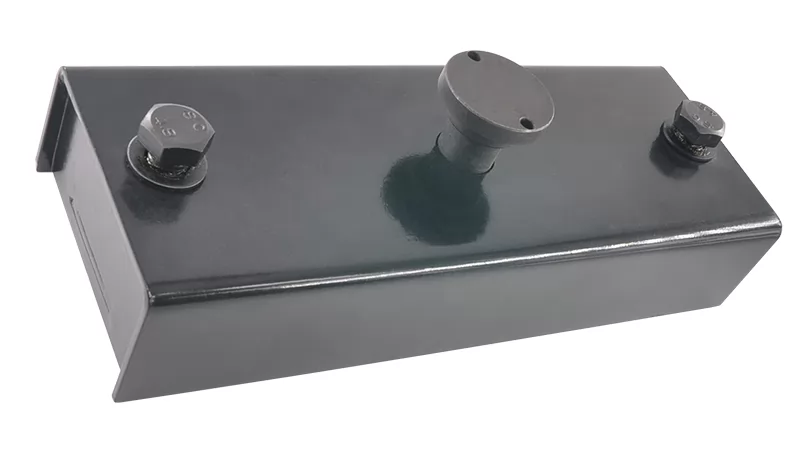
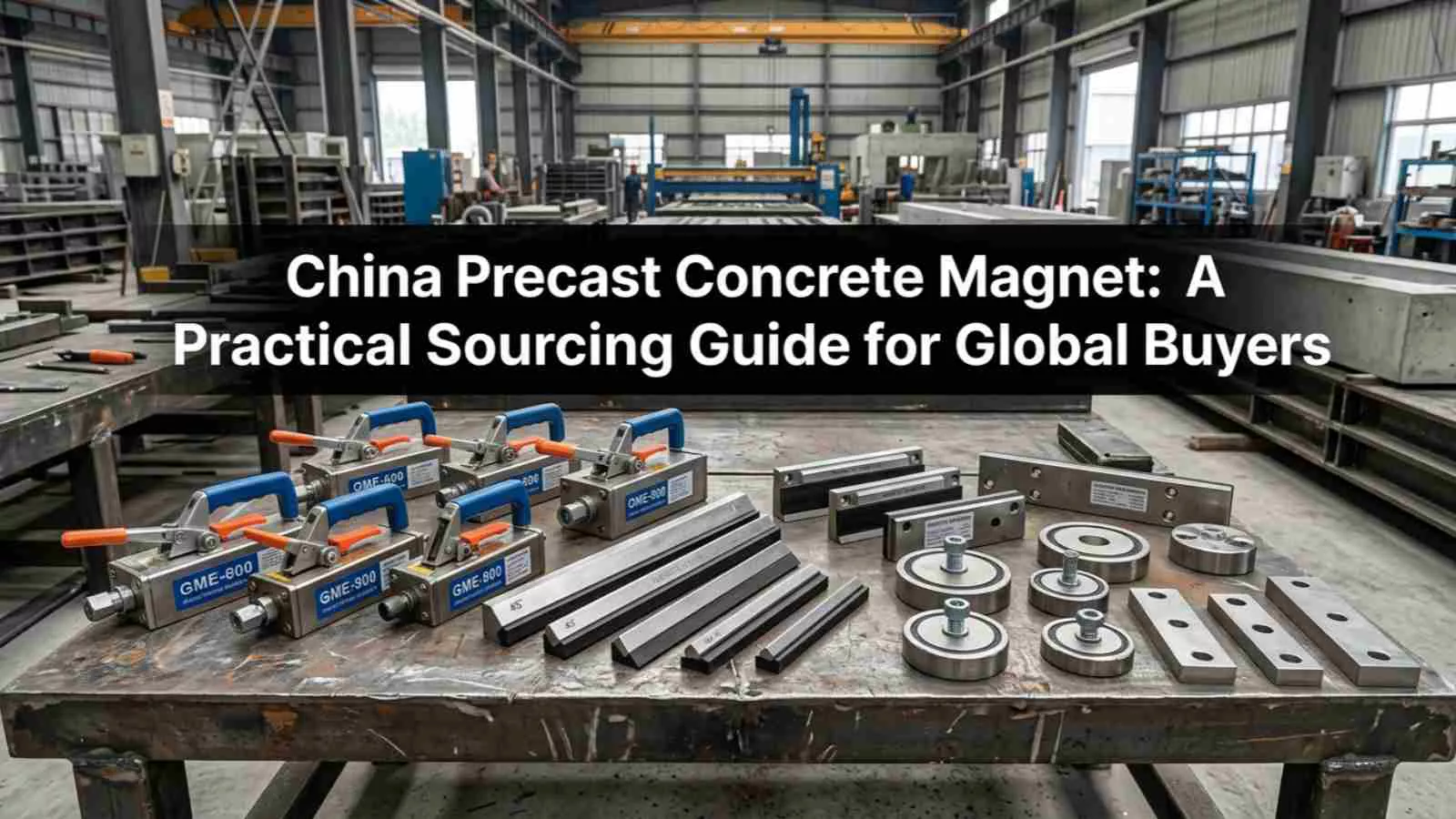
Chinese manufacturers supply several magnetic products for precast concrete applications. The three most relevant categories are shuttering magnets, insert fixing magnets, and magnetic chamfers.
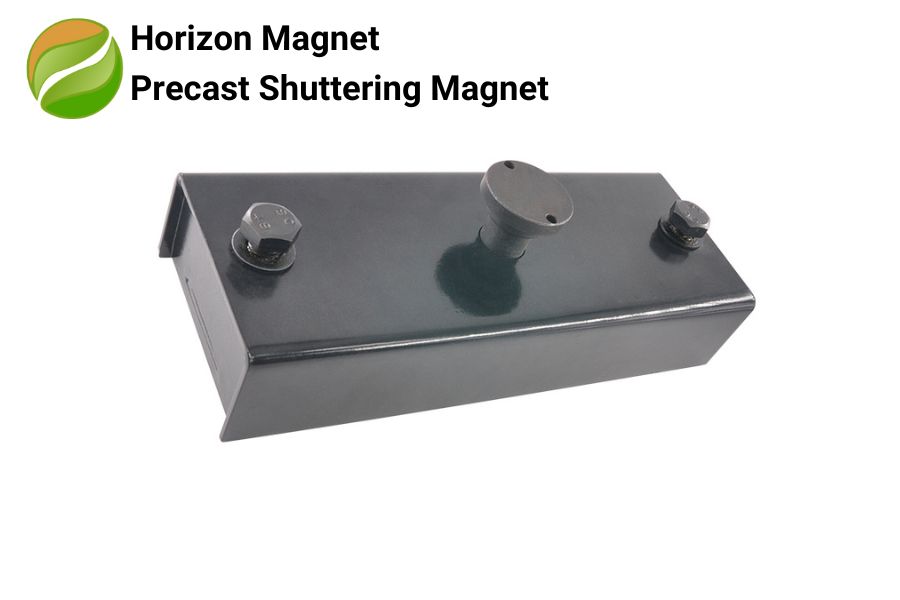
Shuttering magnets are used primarily to secure side forms and temporary formwork against steel casting tables.
They can be used for wall panels, beams, columns, floor elements, and other precast components. Their main advantage is that the formwork can be repositioned without permanently modifying the casting table.
The appropriate magnet depends on the formwork profile, required holding force, available installation space, and production conditions.
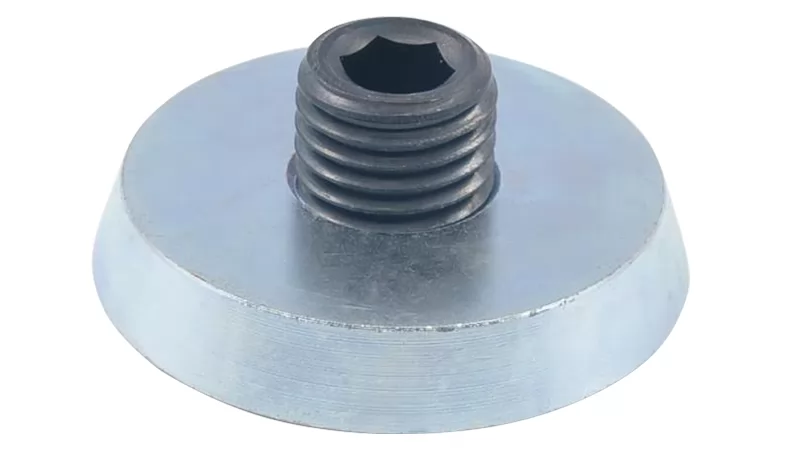
Insert fixing magnets hold embedded components in their intended position during concrete casting.
They can be used with:
Accurate positioning is important because movement during casting can affect the final position of the embedded component and create problems during later installation.
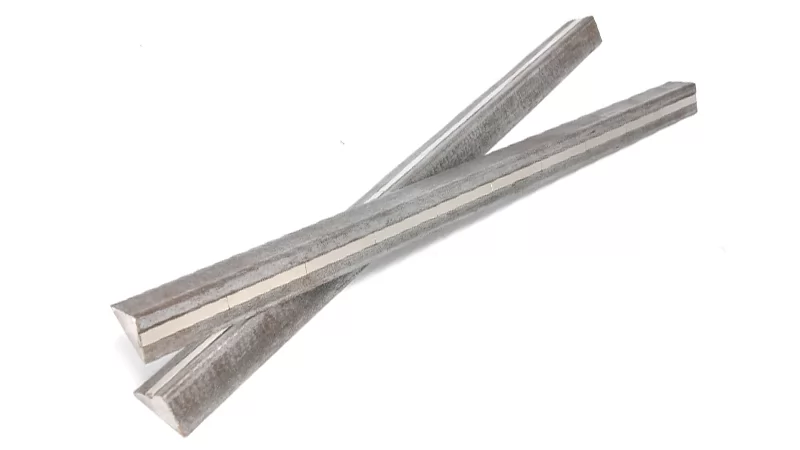
Magnetic chamfers are formwork accessories designed to create consistent beveled edges on precast concrete elements.
They are useful for wall panels, architectural concrete, beams, columns, and other applications where a defined edge profile is required.
Because they can be repositioned and reused, magnetic chamfers can simplify changes between different casting configurations.
A reliable purchasing decision starts with the application rather than a catalog model. Buyers should evaluate several specifications together.
Holding force is one of the most important specifications, but it should not be considered in isolation.
The required force can depend on:
A higher force rating does not automatically mean a better product. An oversized magnet may add unnecessary cost and weight when a lower-force model is already suitable.
For example, Horizon offers several shuttering magnet configurations with different force ratings. Buyers should select a model according to actual application requirements rather than simply choosing the strongest available option.
When comparing Chinese suppliers, ask how the holding force was tested and under what surface and steel conditions. This makes quotations easier to compare on a like-for-like basis.
Physical dimensions can be just as important as magnetic performance.
Before ordering, confirm:
A magnet may provide sufficient theoretical force but still be unsuitable if it cannot fit correctly into the formwork system.
For customized orders, providing a technical drawing or application photograph can help the manufacturer understand the required interface.
The condition of the contact surface can significantly influence actual magnetic performance.
An air gap may be created by:
As the gap between the magnet and steel surface increases, available magnetic force can decrease.
Therefore, buyers should ask suppliers what conditions were used when measuring the stated holding force. The figure should not be treated as a universal value independent of surface conditions.
Temperature should be checked whenever the production process involves heated curing.
Ask the manufacturer about:
For example, Horizon's MF-series shuttering magnets specify a maximum operating temperature of 80°C. Buyers should compare this specification with their actual curing process before ordering.
The magnetic material itself is only one part of the assembly. The housing and mechanical components also affect service life.
For repeated precast applications, consider:
A well-designed housing can help protect the magnetic assembly from the physical conditions encountered during repeated production cycles.
China offers a large number of magnet manufacturers, distributors, and trading companies. The challenge is determining which supplier can consistently meet the technical requirements of a particular production application.
Start by determining whether the company actually manufactures the magnetic assembly or primarily resells products.
Useful questions include:
A direct manufacturer may provide more flexibility for customized products, but the word "factory" should not be treated as proof of quality. Buyers should still evaluate samples, specifications, testing, and production controls.
Standard magnets are suitable for many applications, but customized assemblies may be required when formwork systems have unusual dimensions or mounting requirements.
Customization may involve:
Before requesting an OEM quotation, provide the manufacturer with drawings, dimensions, photographs, required quantity, and operating conditions whenever possible.
A technically capable supplier should also be able to identify potential design problems rather than simply accepting every requested specification.
Quality consistency becomes particularly important for repeat orders.
Ask what the supplier checks before shipment. Depending on the product, relevant inspections may include:
For customized products, the approved sample should become a reference for subsequent production.
The objective is not simply to prove that one sample works. The supplier should demonstrate that the same specification can be reproduced consistently across the production batch.
International sourcing also requires reliable commercial and technical communication.
Consider whether the supplier can provide:
A supplier that can communicate clearly with both purchasing and engineering teams can reduce misunderstandings during product development and repeat orders.
Magnetic fixing is one of several ways to secure precast formwork. Welding, bolting, and mechanical clamping may still be appropriate depending on the application.
| Factor | Magnetic Fixing | Welding | Bolting | Mechanical Clamping |
|---|---|---|---|---|
| Setup Speed | High | Low | Medium | Medium |
| Repositioning | Easy | Difficult | Medium | Easy |
| Table Damage | Low | High | Medium | Low |
| Reusability | High | Low | Medium | High |
| Formwork Flexibility | High | Low | Medium | High |
Magnetic fixing is particularly useful when manufacturers regularly change formwork layouts on reusable steel casting tables.
The correct choice should nevertheless be based on the complete production process. Buyers should consider labor, setup time, table maintenance, repositioning requirements, and long-term reuse rather than comparing only the initial purchase price.
A structured sourcing process can reduce both technical and commercial risks.
Prepare basic information about:
Determine the required:
If the required force is uncertain, ask the manufacturer to recommend a suitable range based on the application.
Before placing a large order, request:
For a new supplier, samples provide an opportunity to confirm compatibility before committing to bulk production.
Whenever possible, test the sample under conditions similar to actual production.
Check:
Customized products should also be checked against the approved drawing.
Once the sample is approved, confirm how the manufacturer will maintain the same specification during mass production.
Discuss:
Before placing the order, confirm:
For recurring purchases, keep an approved technical specification and sample as a reference for future orders.
Before selecting a supplier, international buyers should ask a few practical questions:
The quality of a supplier's answers can reveal its technical competence. Clear specifications, consistent communication, and willingness to support sample testing are generally more useful indicators than a low initial quotation.

For buyers seeking a China-based supplier, Horizon Magnetics provides magnetic assemblies for precast concrete and construction applications.
Its product range covers several common requirements, including shuttering magnets, insert fixing magnets, and magnetic chamfers. This allows buyers to discuss different magnetic fixing requirements with one technical supplier.
Horizon offers solutions for:
Horizon provides shuttering magnet configurations designed for different application requirements. Buyers can discuss the appropriate force level according to formwork dimensions, production conditions, and installation requirements rather than selecting solely by catalog price.
For non-standard formwork, buyers can provide drawings, dimensions, photographs, required force, and operating conditions for technical evaluation.
This is particularly useful when standard magnetic assemblies do not provide the required mounting interface or physical dimensions.
For international procurement teams, the objective should be to evaluate Horizon using the same criteria applied to other suppliers: technical suitability, manufacturing capability, customization, quality control, and communication.
Before Requesting a Quote
Before Ordering Samples
Before Bulk Ordering
Sourcing a China precast concrete magnet should be treated as a technical purchasing decision rather than a simple price comparison.
The right product needs to match the formwork, steel surface, required holding force, temperature, and production environment. The supplier should also be able to provide consistent manufacturing, quality control, technical communication, and customization support when required.
For international buyers, the most reliable process is straightforward: define the application, confirm the specifications, compare qualified suppliers, request samples, test them under realistic conditions, verify production quality, and then finalize the commercial terms.
A supplier that can consistently deliver the right magnetic assembly for the application is ultimately more valuable than one offering the lowest initial quotation.
Contact Horizon Magnetics to discuss your precast concrete magnet requirements, including holding force, dimensions, formwork compatibility, and customized magnetic assemblies.


Discover the Top 10 China Magnet Manufacturers in 2026! Explore leading suppliers, their specialties, and find the perfect partner for your magnetic material needs.

Discover the top 10 shuttering magnet suppliers in the US for 2025. Explore trusted manufacturers offering high-quality magnetic formwork solutions for the precast concrete industry.

A practical engineering guide to shuttering magnets for precast concrete production. Learn how to select, use, and maintain shuttering magnets to improve efficiency, flexibility, and long-term cost performance.







.png)
.png)