




Are you looking for reliable rare earth magnet manufacturers for a traction motor, a wind turbine generator, a sensor package, or a production line that cannot afford a supply interruption?
If the answer is yes, then this guide was written for you. Most articles about rare earth magnets spend their length explaining what NdFeB and SmCo are. Far fewer tell a buyer which companies actually make them, what each one is genuinely good at, and how to compare them before an RFQ goes out.
This article profiles ten companies that supply rare earth magnets and magnetic assemblies to industrial customers in 2026. Some are pure manufacturers, some are vertically integrated groups, and some are specialist suppliers — and the difference matters when you are deciding where to send an RFQ.
The list is deliberately mixed rather than uniform. It includes vertically integrated Chinese manufacturers working at tonnage scale, Western engineering houses that specialise in high-temperature materials and precision assemblies, a neodymium specialist whose technical catalogue is unusually strong, and one alternative-technology developer that is worth tracking because it may change the material question within a few years. Every profile follows the same five-part structure — company profile, main products, manufacturing capabilities, key applications and customization services — so the companies can be compared side by side.
If you are already shortlisting suppliers, jump straight to the company profiles and the sourcing checklist.
Any list of this kind is only as good as its selection logic, so here is the one used here. A company was included if it met most of the following:
The result is intentionally not ten identical factories. Some entries are pure manufacturers, some are vertically integrated groups, and two are specialist suppliers whose role in the supply chain is different but legitimate. Where a company is included for a specific reason rather than for tonnage, the profile says so plainly.
Company details in the profiles below are drawn from publicly available company information as of November 2026 and are summarised for orientation only. Capacities, certifications and product ranges change; confirm current data, certificates and specifications directly with each supplier during qualification.
Company Profile
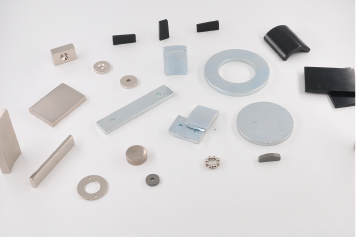
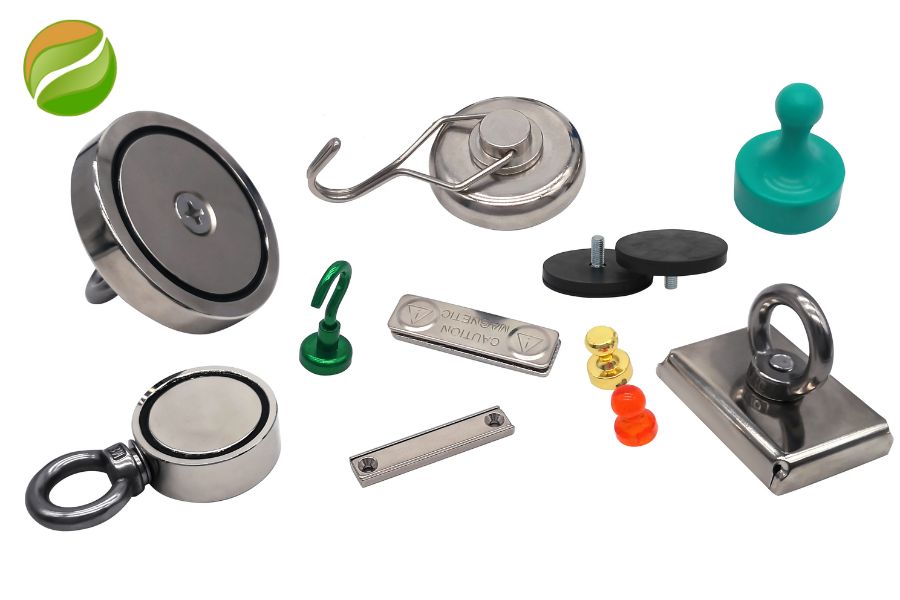
Horizon Magnet is a China-based manufacturer of rare earth magnets and magnetic assemblies, supplying OEM customers with sintered neodymium (NdFeB) magnets, samarium cobalt (SmCo) magnets and finished assemblies. The company sits in the segment between a job shop and a mass producer: it takes a design from drawing or sample through tooling, prototyping and pilot builds into recurring volume production, with published annual rare earth magnet capacity in the region of 500 tonnes. Its customer base is concentrated in motor, sensor, pump, audio and industrial automation applications where the magnet is a critical rather than a commodity component.
Main Products
Manufacturing Capabilities
Production covers the full sintered route — powder preparation, pressing, sintering, ageing, machining, coating, magnetizing and inspection — with in-house control over the steps that most often cause quality escapes: grinding tolerance, coating adhesion and magnetization consistency. Inspection typically includes flux and gauss measurement, pull-force testing, Helmholtz coil measurement and dimensional checks, and the company supports sample development before committing to volume tooling. Buyers evaluating Horizon should ask for a process flow diagram for the specific part, coating salt-spray data, and the measurement method used for the acceptance criteria.
Key Applications
Customization and OEM/ODM Services
Customization is the core of the offer rather than an add-on: drawing-based design support, grade and coating selection, magnetizing fixture design, assembly and bonding, custom packaging and labelling. For OEM programmes the company supports specification reviews, first-article inspection reports and change notification; ODM-style engagements, where the supplier contributes to the magnetic circuit design, are available on request and should be scoped in writing with clear IP ownership terms.
Company Profile
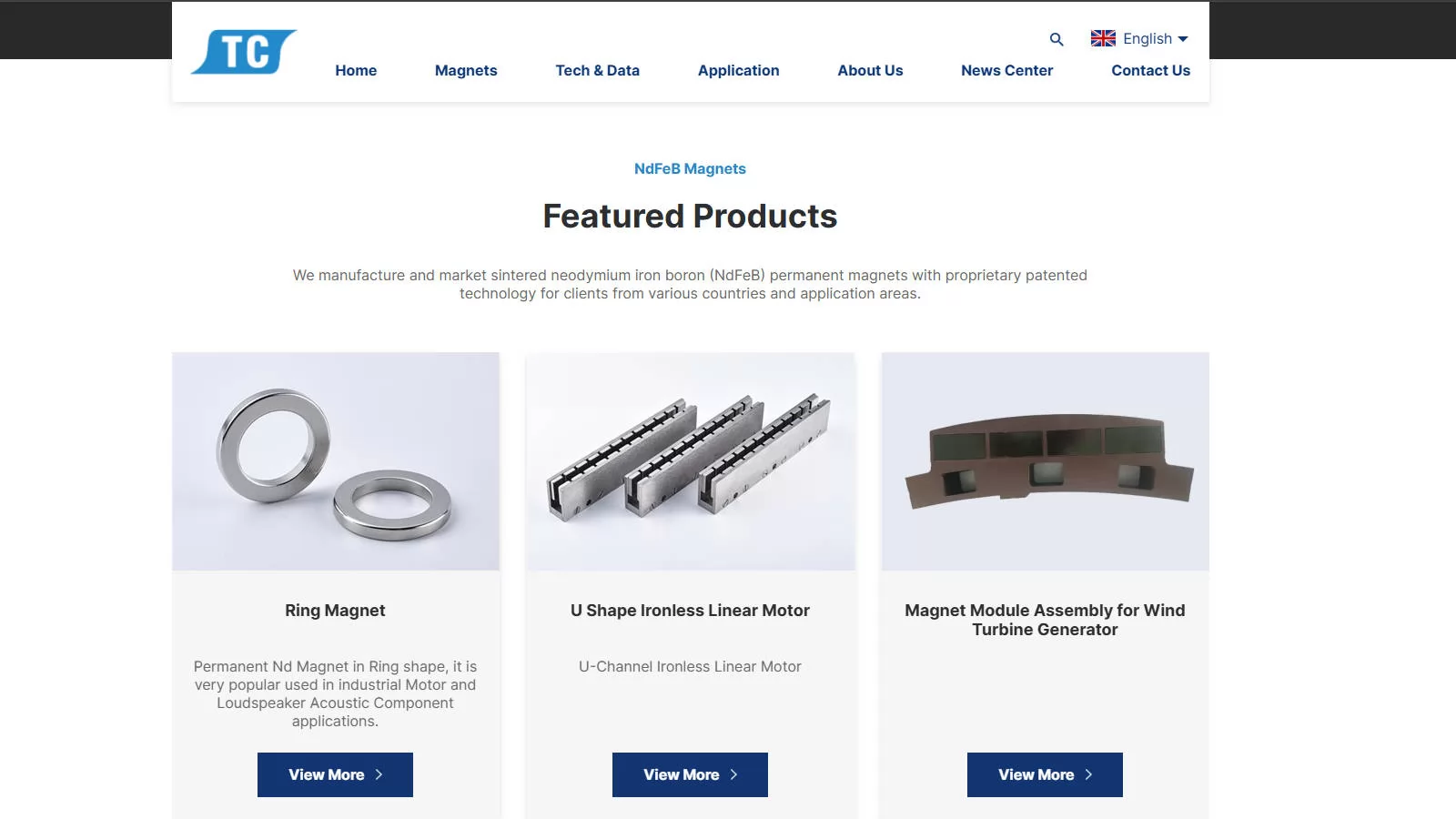
Ningbo Tongchuang Magnetic Materials Co., Ltd. is a sintered NdFeB specialist based in Ningbo, one of China’s densest clusters of magnet production and downstream machining suppliers. Founded in 2004, the company has grown into a volume manufacturer with a production site reported at roughly 158,700 m² and annual capacity in the order of 10,000 tonnes. It integrates research, production and sales, and its technical work includes low-dysprosium, high-coercivity sintered NdFeB — a direction that matters commercially, because dysprosium and terbium are the most expensive and most supply-constrained inputs in a high-temperature grade.
Main Products
Manufacturing Capabilities
Capacity at this scale implies automated pressing, continuous sintering furnaces and dedicated machining lines, which is what allows consistent output at volume rather than one-off precision. The trade-off buyers should understand is that very large plants are optimised for repeatability and volume; small, highly irregular orders may sit lower in the scheduling queue than they would at a smaller specialist. For programmes in the tens of thousands of pieces per year, however, few suppliers can match the cost structure. Confirm current certification status, the specific grade range available at the required coercivity, and the plant’s demonstrated capability on radial rings before designing one into a motor.
Key Applications
Customization Services
Grade and coating selection, tooling for pressed shapes, machining to tolerance, radial orientation for ring magnets, and assembly of magnet sub-components. Because the company’s strength is process scale, customization conversations tend to focus on magnetic design within a known grade window rather than on exotic geometries; that is a reasonable fit for motor programmes, less so for low-volume instrumentation work.
Company Profile
Arnold Magnetic Technologies is one of the oldest names in magnetics, with a history dating to 1895 and manufacturing operations in the United States, Europe and Asia. Its positioning is engineering-led rather than tonnage-led: the company designs and builds precision magnetic assemblies, rotors and instruments for aerospace, defence, medical, motorsport and industrial customers where tolerances, temperature and qualification requirements are demanding.
An important distinction for buyers: Arnold should not be described as a producer of every rare earth magnet type. Its own production and processing strength lies in samarium cobalt, AlNiCo and bonded or injection-moulded magnets, while neodymium material is obtained through authorised supply relationships with Asian producers and then fabricated, assembled and tested in-house. That is a legitimate and common model — but it means the qualification question is different: you are qualifying an engineering and assembly capability together with a specific, disclosed NdFeB source, not a single integrated NdFeB plant.
Main Products
Manufacturing Capabilities
The distinguishing capabilities are design and process engineering rather than raw magnet tonnage: rotor design and electromagnetic modelling, magnetizing fixture development, magnetization and testing, precision machining and grinding, adhesive bonding and mechanical assembly, plus the metallurgical know-how to work with SmCo at temperature. Testing capability extends to flux mapping, back-EMF and magnetic field verification on finished assemblies, which is what aerospace and defence programmes typically require.
Key Applications
Customization Services
Custom design from concept through prototype and qualification, with engineering support on the magnetic circuit rather than only on the magnet. For NdFeB content, ask explicitly which producer supplies the material, what grade and coating are used, and whether the material source is fixed for the life of the programme — that single question resolves most of the ambiguity in a dual-model supply chain.
Company Profile
K&J Magnetics is best understood as a neodymium magnet specialist and distributor rather than a large-scale industrial manufacturer. The company stocks and sells sintered NdFeB magnets in an unusually broad catalogue of shapes, sizes and grades, supported by application notes, magnetic calculators, handling guidance and pull-force data that are genuinely useful during early design work. Its customers range from educators and hobbyists to product developers and engineers specifying a first prototype.
This profile is included because engineers routinely use it at the front end of a project, and because its published data is more reliable than most. It is not included as a claim of tonnage-scale manufacturing capability, and buyers who need a production partner for a motor programme should treat it as a component source and technical reference, not as a substitute for a magnet factory.
Main Products
Capabilities and Limits
The strengths are availability, specification transparency and support: dimensions and tolerances are published, pull forces are measured rather than estimated, and the site explains safety and handling in practical terms. The limits follow from the business model. Custom geometry, non-standard grades, special coatings, PPAP documentation and long-term capacity commitments are not the core offer, and production volumes are constrained by stocked inventory rather than by a plant schedule. For a design that will eventually run at 50,000 units a year, the sensible path is to prototype from this catalogue and then transfer the specification to a manufacturer.
Key Applications
Customization Services
Limited by design: standard catalogue parts, with assembly hardware and mounting options rather than bespoke magnet production. Buyers should not expect drawing-based custom machining, application-specific coatings or volume supply agreements. The value here is speed and information, not engineering-to-order.

Company Profile
Niron Magnetics is not a rare earth magnet manufacturer, and it is included here for a different reason: it is developing a credible non-rare-earth alternative that could change material selection for cost-sensitive motor programmes. The company commercialises iron nitride (Fe&sub16;N&sub2) magnet technology originating from research at the University of Minnesota, aiming to deliver useful magnetic performance without neodymium, dysprosium or cobalt.
Status matters as much as technology. Niron operates a commercial pilot facility producing material for customer sampling and evaluation, while its larger Sartell, Minnesota plant is targeted for operation in 2027. In practical terms, a buyer in 2026 can evaluate samples and qualify a design concept, but cannot yet place a multi-year volume order against a proven production line.
Main Products
Manufacturing Capabilities
Pilot-scale production with a documented path to commercial scale, backed by significant public and strategic investment. The relevant technical questions for a buyer are not about capacity alone but about repeatability: what energy product is achievable in a production part rather than a laboratory sample, how the material behaves at 150 °C and above, what coating systems are compatible, and what the qualification timeline looks like. Iron nitride is expected to be positioned between ferrite and NdFeB in performance, which makes it relevant for appliances, pumps and auxiliary motors rather than for traction motors that need maximum torque density.
Key Applications Under Development
Engagement Model
Sampling and joint development rather than catalogue supply. Companies with a genuine interest should approach Niron as a technology partner with a defined evaluation programme and a realistic timeline that extends beyond the 2027 plant start-up. It is also worth tracking as a benchmark: if iron nitride reaches volume at competitive cost, it will pressure the lower end of the NdFeB market first.
Company Profile
Element Magnets Inc. supplies high-performance rare earth magnets and magnetic assemblies to industrial and commercial customers in North America, positioning itself on responsiveness, flexible order quantities and quick turnaround rather than on tonnage. The company supports both catalogue parts and drawing-based custom work, and is most often used by engineering teams that need a compliant part in weeks rather than quarters.
Public disclosure of manufacturing detail is limited, and that is the main caveat in this profile. Buyers should establish early whether a given part is produced in-house or sourced and finished through a partner, since the answer determines who owns the process control and where the qualification evidence comes from. It is a normal question to ask any supplier of this size, and a straightforward answer is a reasonable indicator of maturity.
Main Products
Capabilities and Limits
The value proposition is commercial and logistical: smaller minimum order quantities than a large plant will accept, faster response on prototypes and bridge volumes, and willingness to assemble magnet plus housing plus fastener as a single part number. The corresponding limits are depth of process control and capacity headroom. For a programme ramping beyond tens of thousands of units per year, or one requiring full automotive PPAP, expect the supply chain behind the supplier to become visible, and qualify it explicitly.
Key Applications
Customization Services
Drawing-based sourcing, grade and coating selection, assembly of magnet and hardware, and low-volume custom runs. Documentation such as material certificates and dimensional reports is available on request; buyers with regulated products should confirm upfront which test reports and traceability records can be supplied routinely rather than on an exception basis.
Company Profile
Magnetic Hold, Inc. is a US-based manufacturer of permanent magnets and magnetic assemblies for industrial, commercial and retail applications. Its identity is built around holding and fixturing rather than around raw magnet supply: the company designs and builds assemblies that use magnets to clamp, position, retain or release something, and manufactures both standard product lines and custom assemblies in-house.
Main Products
Manufacturing Capabilities
In-house design, machining, assembly and inspection of magnetic assemblies, with the ability to combine magnets with metal housings, plastics and fasteners into a single part number. This is assembly-led manufacturing: the magnet is one input, and the engineering value lies in the housing geometry, the holding force achieved at a given air gap, and the durability of the finished assembly. Buyers should request holding-force data at the actual working gap, since catalogue pull forces are measured in idealised contact conditions and are rarely achieved in service.
Key Applications
Customization Services
Custom assembly design is the core service: housing design, magnet selection, force calculation, prototype builds and production runs. The company is a sensible partner for a holding application where the requirement is expressed as “hold this part securely at this orientation” rather than as a magnet specification. It is a less obvious fit for high-volume motor magnets, which require a different process base.
Company Profile
ZHAOBAO MAGNET, based in Ningbo, is one of the larger Chinese producers of permanent magnets, operating across neodymium, samarium cobalt and AlNiCo material families. The company reports three production bases and aggregate annual capacity above 11,000 tonnes, and describes a quality system built around ISO 9001 and ISO 14001 with additional automotive-oriented certification for its NdFeB operations. Its market is export-led, with a customer base spanning automotive, wind power, medical, consumer electronics and industrial automation.
The breadth is the differentiator. A buyer who needs NdFeB for a motor, SmCo for a high-temperature sensor and AlNiCo for an instrument can consolidate three part families with one supplier and one set of quality documents, which reduces audit effort considerably.
Main Products
Manufacturing Capabilities
Integrated production from powder to finished, coated and magnetized part, with multiple sites providing redundancy — a meaningful advantage when a single plant outage would stop a customer line. Machining, plating and inspection are handled in-house, and the group has the scale to support annual contracts with committed volumes. Buyers should still verify the certificate scope for each site rather than for the group as a whole, confirm which site will produce their part, and ask for the last twelve months of process capability data on the critical dimension.
Key Applications
Customization Services
Grade development, coating selection, tooling for pressed geometries, precision machining, assembly and magnetizing. Because the group spans three material families, it can advise on substitution — for example whether a SmCo part can be replaced with a high-coercivity NdFeB design at lower cost, or the reverse where temperature margins are tight. That kind of cross-material comparison is worth requesting explicitly during the RFQ stage.
Company Profile
Newland Magnetics Group is a China-based producer of rare earth permanent magnets with an export-oriented sales structure. The company manufactures neodymium magnets and samarium cobalt magnets, and supplies machined magnet components and assemblies to customers in automotive, medical, motor and automation industries. Its proposition is built around a combination of material production and downstream machining, which matters for buyers whose drawings specify tight tolerances, unusual geometries or finished sub-assemblies rather than blank magnets.
Publicly available technical detail is more limited than for the largest producers, so this profile is deliberately conservative. Buyers should treat the group’s capability claims as a starting point and verify them through a plant audit, a sample order and documented process capability on the specific part.
Main Products
Manufacturing Capabilities
Sintering, machining, coating and magnetizing, with an emphasis on the machining stage — the step that determines whether a magnet can be used in a precision motor rather than a generic holding application. The questions that separate a capable supplier from an average one here are concrete: what tolerance can be held on a 40 mm arc segment, what is the measured coating thickness distribution on an epoxy-coated part, and how is magnetization angle controlled on a multipole ring. Ask for data, not assurances.
Key Applications
Customization Services
Drawing-based machining, grade and coating selection, assembly and custom packaging. The group is a reasonable fit for programmes that need a manufacturer able to take on secondary machining rather than only pressing and sintering. Confirm the site that will run the work, the inspection plan, and the documentation package available at PPAP or first-article stage.
Company Profile
Stanford Magnets has supplied rare earth magnets to North American and international customers since 1994, offering neodymium and samarium cobalt material together with engineering support and custom assembly work. The company describes its activity as research, production and sales, and supports customers from prototype through to series production across motors, medical devices, industrial automation and consumer products.
One clarification is worth making for accuracy: Stanford operates as a combined manufacturer and supply house, with part of its range produced in-house and part sourced through qualified partners. That is a perfectly workable model for buyers who want a single accountable supplier with US-based technical support, but it means the RFQ should state which parts require in-house production and which may be sourced, so that the qualification and change-control obligations are unambiguous.
Main Products
Manufacturing Capabilities
Production and finishing capability supplemented by a qualified supplier network, with engineering support on material selection, magnetic circuit design and tolerance analysis. The practical advantage for a US-based buyer is time-zone-aligned technical communication and a single point of accountability across multiple magnet types and assemblies. The practical risk is traceability when a part is sourced rather than made, so specify material origin, certificate requirements and change notification in the purchase agreement.
Key Applications
Customization Services
Custom grade and coating selection, drawing-based production, assembly, and engineering support through prototyping. Suitable for buyers who value responsive technical contact and a broad material offer over lowest achievable unit cost, and for programmes where consolidating several magnet part numbers with one supplier reduces administrative load.
Choosing a supplier is a qualification exercise, not a price comparison. The five areas below are the ones that most often determine whether a programme runs smoothly or spends its second year in containment.
Establish what the supplier actually controls. A plant that presses, sinters, machines, coats and magnetizes in-house has fewer handoffs and clearer accountability than one that outsources three of those steps. Ask for the process flow for your specific part, the site that will run each operation, and the capacity available in the scheduling window you need.
A grade name is a starting point, not a specification. What you need is the demagnetization curve at the working temperature, the intrinsic coercivity, and confirmation that the supplier’s production distribution sits inside your tolerance band rather than at the edge of it.
A supplier who answers these questions with data sheets and test reports is a different category of partner from one who answers with assurances. The questions also filter quickly: a factory that cannot produce a demagnetization curve at 150 °C probably does not routinely supply automotive-grade material.
For more background on grade selection, coating systems and the trade-offs between material families, the Horizon Magnet technical blog covers these topics in more depth.
Certificates are necessary but not sufficient. ISO 9001 tells you a system exists; it does not tell you whether the coating thickness on your part is measured or assumed. Look for the scope of certification, the site it covers, and the inspection plan that will apply to your order.
Most industrial magnet requirements are custom, so the relevant question is not whether a supplier offers customization but how far up the design chain it can go.
For OEM programmes, also confirm whether the supplier will sign a specification agreement covering grade, coating and dimensional acceptance, and whether they will hold a safety stock. For ODM-style engagements, define ownership of drawings and tooling before the first prototype, not after.
Rare earth magnet pricing moves with NdPr, dysprosium, terbium and cobalt, and lead times move with capacity utilisation. A supplier who is transparent about both is easier to plan around than one who quotes a fixed price for twelve months without a material adjustment clause.
The last point deserves attention in 2026. Rare earth supply chains are subject to export controls and licensing requirements in several jurisdictions, and delivery schedules can be affected by documentation rather than by production. Confirm at RFQ stage who is responsible for export documentation, what end-use declarations are required, and how much lead time the paperwork adds.
Rare earth magnets are made from alloys containing rare earth elements combined with transition metals. The two commercial families are neodymium-iron-boron (NdFeB), typically Nd–Fe–B with additions of dysprosium, terbium, cobalt and copper to control coercivity and temperature behaviour, and samarium-cobalt (SmCo), usually SmCo&sub5; or Sm&sub2;Co&sub17;. The rare earth content provides the high magnetocrystalline anisotropy that makes the material so strong; the transition metals provide the crystal structure and magnetic moment.
NdFeB offers higher magnetic strength and lower cost per unit of magnetic energy, which is why it dominates motors, electronics and wind generators. SmCo tolerates much higher operating temperatures — 300 °C and above in suitable grades — has a lower reversible loss per degree, and resists corrosion without coating. The trade-off is price and available energy product. The practical rule: choose NdFeB unless the application exceeds roughly 200 °C, requires minimal field variation across temperature, or operates in a corrosive environment where coating integrity cannot be guaranteed.
Five factors dominate. Temperature reduces induction and, beyond a threshold set by coercivity, causes irreversible loss. The magnetic circuit — air gap, permeance coefficient and the presence of reverse fields — determines how much of the material’s capability is usable. Geometry and orientation affect the field shape and the achievable flux density in the gap. Coating condition determines long-term reliability in humid or chemical environments. And material consistency, particularly coercivity distribution across a batch, determines whether two parts behave identically in a production line.
Qualify on evidence rather than price. Ask for current certifications for the specific site, demagnetization data at your working temperature, a sample order measured against your drawing, and a documented inspection plan. Visit or audit the plant if the programme is significant, and confirm which operations are in-house. Then test the commercial side: lead-time honesty, change notification, export documentation, and willingness to accept a material price adjustment clause. A supplier that answers precisely and quickly during qualification usually behaves the same way during production.
Yes — most industrial supply is custom to some degree. Customization can range from a non-standard dimension on a standard grade, through custom tooling for a pressed shape, to a fully engineered assembly with housing, adhesive and magnetization pattern. What varies is depth: some suppliers work only from a finished drawing, others will support magnetic circuit design, tolerance analysis and fixture development. Specify at RFQ stage which level you need, and ask whether tooling is dedicated and who owns it.
Demand for rare earth magnets in 2026 is being pulled by electric drivetrains, wind generation, automation and electrified heating, and the supply side has become more differentiated than the raw material headlines suggest. There is no single best manufacturer. There is a best fit for a given combination of temperature, tolerance, volume, certification and cost.
The ten companies profiled here represent that range. Vertically integrated producers such as Ningbo Tongchuang and ZHAOBAO MAGNET compete on scale and material breadth. Engineering-led houses such as Arnold Magnetic Technologies compete on design, assembly and high-temperature capability. Specialist suppliers such as K&J Magnetics and Element Magnets serve the prototyping and bridge-volume end of the market, while Niron Magnetics represents a material alternative that could reshape the lower-performance segment later this decade. Horizon Magnet sits where custom specification and repeatable production meet, taking a drawing or a sample through tooling and qualification into recurring supply of magnets and assemblies.
Whichever supplier you approach, the same shortlist of questions applies: what grade and coercivity at the working temperature, what coating and acceptance test, what tolerance and inspection plan, what lead time and capacity commitment, and who owns the tooling. Get written answers to those five, verify the plant, and run a sample order before committing a programme. That process costs a few weeks and prevents most of the failures that make magnet sourcing feel difficult.

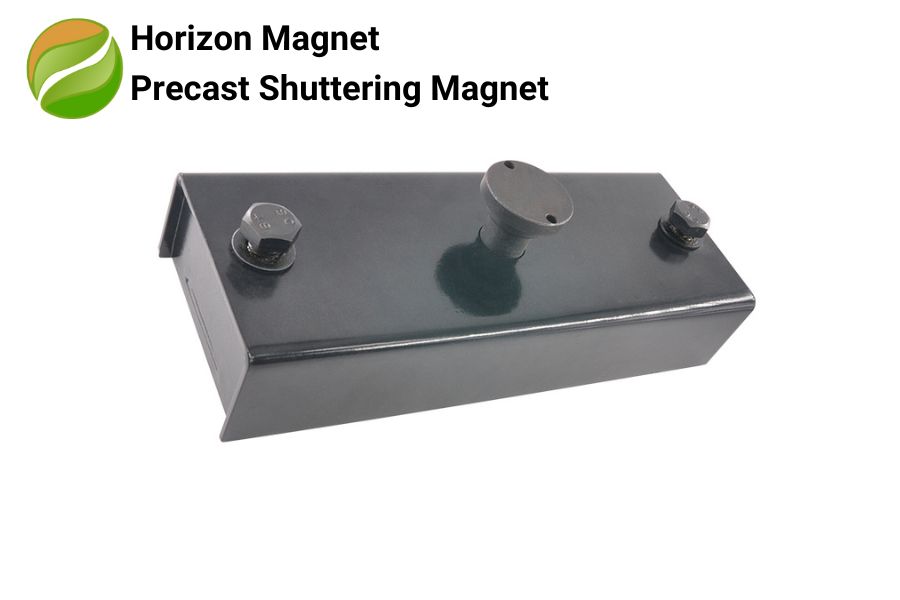
Top Chinese shuttering magnet manufacturers provide reliable, customizable magnetic solutions for precast concrete production, enhancing efficiency and formwork stability.
Explore the leading rare earth magnet manufacturers in 2026. Discover global suppliers of Neodymium and Samarium Cobalt magnets for EVs, wind energy, and more.
Compare 10 neodymium magnet manufacturers and magnetic solution providers. Explore magnet grades, product capabilities, custom solutions, and key buying factors to find the right partner for your application.








.png)