





Neodymium pot magnets combine the high magnetic strength of neodymium iron boron (NdFeB) magnets with a steel housing designed to concentrate magnetic flux toward the working surface. This construction makes them useful when a compact magnet needs to provide reliable holding force while also offering a practical way to mount or fasten components.
Unlike a bare neodymium magnet, a pot magnet is a complete magnetic assembly. Its performance depends not only on the magnet grade but also on the steel pot, dimensions, mounting configuration, contact surface, and operating conditions.
For engineers, equipment designers, and procurement teams, understanding these factors makes it easier to select the right neodymium pot magnets for fixtures, machinery, positioning systems, signs, displays, and other mounting applications. Discover our full selection of high-performance neodymium pot magnets designed for industrial holding applications.
Table of Contents
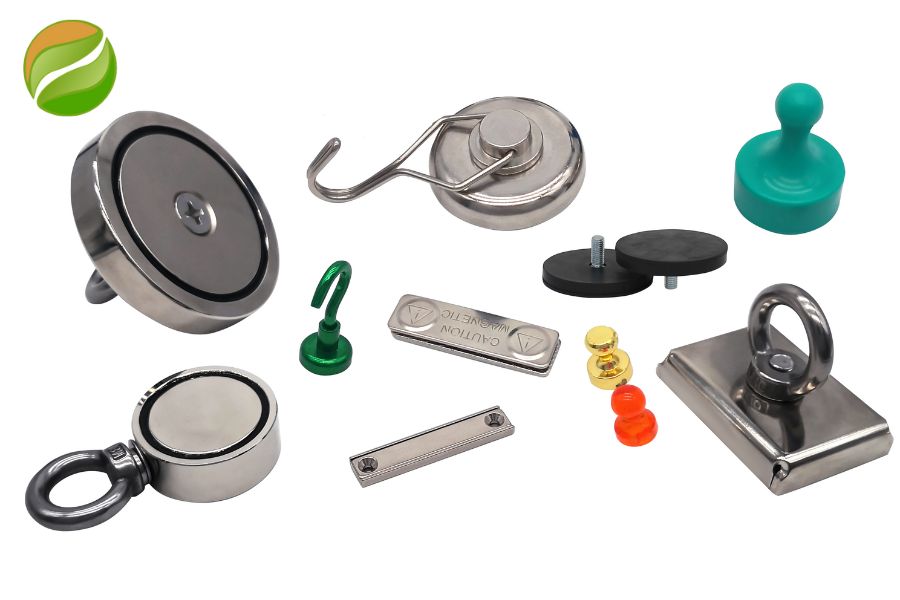
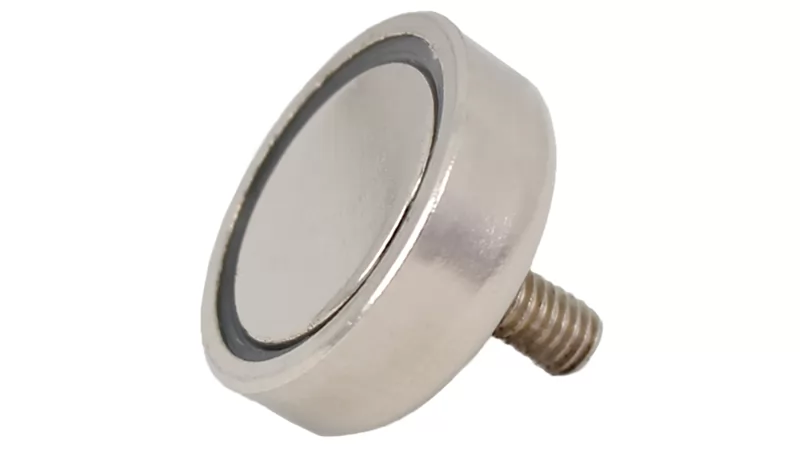
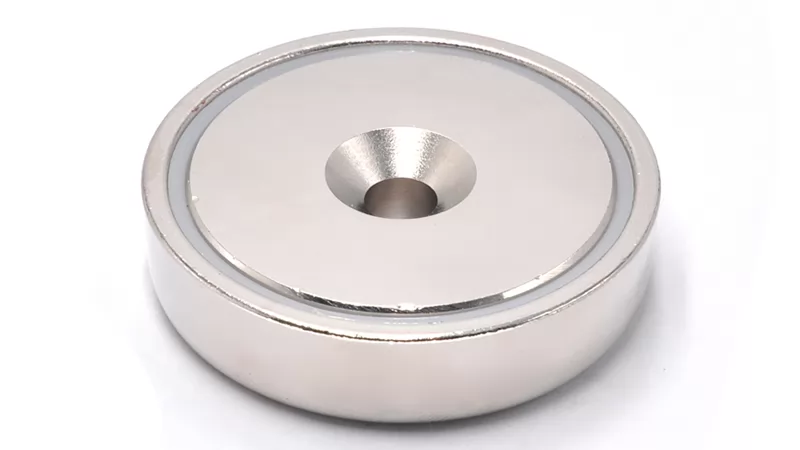
A neodymium pot magnet consists of a permanent NdFeB magnet fitted inside a steel cup or pot. The steel housing protects part of the magnet and helps create a more controlled magnetic circuit. Depending on the design, the assembly may also include a hole, threaded stud, internal thread, countersunk opening, or other mounting feature.
The term neodymium pot magnet is often used interchangeably with several related terms, including neodymium cup magnet, neodymium round base magnet, and neodymium mounting magnet. Although the names vary, the basic concept is similar: a strong neodymium magnet is integrated into a ferromagnetic housing to provide concentrated magnetic attraction from a working face.
The housing is an important part of the design. Rather than allowing the magnetic field to extend in all directions, the steel pot provides a preferred path for magnetic flux and directs more of the useful magnetic field toward the exposed face. This can produce substantially higher practical holding force than might be expected from the internal magnet alone.
For this reason, pot magnets should be evaluated as magnetic assemblies, rather than simply as individual NdFeB magnets.
NdFeB is one of the strongest commercially available permanent magnet materials. Its high energy density allows a relatively small magnet to generate substantial magnetic attraction. This makes neodymium particularly suitable for applications where installation space is limited but significant holding force is required.
However, magnet grade alone does not determine the final performance of a pot magnet. The way the magnet is integrated into the steel housing is equally important.
The steel housing provides a low-reluctance path for magnetic flux. Instead of allowing a significant portion of the magnetic field to disperse around the sides and back of the magnet, the pot redirects the flux toward the exposed working surface.
Simplified Magnetic Circuit:
NdFeB magnet → steel housing → concentrated magnetic flux → ferromagnetic target
The effectiveness of this arrangement depends on the geometry and material of the steel housing as well as the magnet itself. A properly designed pot can therefore increase the useful magnetic field at the contact surface without simply increasing the physical size of the magnet.
The main advantage of the pot configuration is that the magnet and steel housing work together as one system. This is why comparing pot magnets only by NdFeB grade can be misleading. Two assemblies using magnets of a similar grade may deliver different holding forces because their magnet dimensions, steel pot geometry, housing thickness, magnetic circuit design, and working-face dimensions are different.
For buyers, the more useful question is therefore not simply “Is this an N42 or N52 magnet?” but “What holding force does this complete pot magnet provide under the relevant test conditions?” Check out our diverse range of reliable pot magnet assemblies to match your exact holding force requirements.
Neodymium pot magnets are available in several configurations. The best option depends largely on how the magnet needs to be installed.
| Pot Magnet Type | Mounting Method | Main Advantage | Typical Application |
|---|---|---|---|
| Through-Hole | Screw or bolt | Simple mechanical fastening | Fixtures and equipment |
| Countersunk | Countersunk screw | Flush installation | Panels and mounting plates |
| Internal Threaded | Threaded accessory | Flexible attachment | Industrial fixtures |
| External Threaded | Nut or fitting | Convenient fastening | Mounting systems |
| Rectangular | Screw or fastener | Larger contact area | Clamping and positioning |
| Rubber-Coated | Various mounting methods | Surface protection | Specialized mounting |
Through-hole pot magnets feature a central opening that allows a screw or bolt to pass through the assembly. They are useful when the magnet needs to be mechanically secured to a fixture, panel, machine component, or other structure. Explore specialized through hole pot magnets for robust mechanical fastening.
Countersunk pot magnets are designed to accommodate a countersunk screw. Once installed, the screw head can sit flush with or below the mounting surface, creating a cleaner installation where protruding fasteners are undesirable. They are commonly considered for panels, fixtures, signs, and equipment where a low-profile mounting arrangement is preferred. Review our options for countersunk pot magnets to achieve a seamless flush fit.
Internal threaded configurations use a female thread within the assembly, allowing compatible screws, studs, or other threaded components to be attached. This design provides greater flexibility when the magnet needs to connect to an existing mechanical assembly. Browse versatile internal threaded pot magnets tailored for industrial integration.
External threaded pot magnets incorporate a threaded stud that extends from the assembly. A nut or compatible fitting can then be used to secure the magnet to a component. This configuration can be useful where quick mechanical attachment or adjustable positioning is required. Check out durable external threaded pot magnets for fast stud-based mounting.
Rectangular pot magnets use a non-circular housing that can provide a broader mounting footprint. Depending on the design, they may be useful for clamping, positioning, fixtures, and applications where the available mounting space is elongated or rectangular. Discover unique rectangular pot magnets suited for broad clamping footprints.
For applications where the mounting surface needs additional protection, rubber-coated pot magnets provide an alternative to conventional exposed steel housings. The rubber layer can help reduce scratching and improve friction between the magnet and the mounted surface. Find non-marking rubber coated magnets designed to protect sensitive contact surfaces.
The holding force of a neodymium pot magnet can be substantial for its size, but there is no single holding-force value that applies to every design. The actual performance depends on the complete magnetic assembly and the conditions under which it is used.
Pull force describes the force required to separate a magnet from a ferromagnetic surface under defined test conditions. Manufacturers may provide pull-force ratings based on contact with a specific steel plate, surface condition, and testing arrangement. This means a stated pull force should not automatically be interpreted as the amount of weight the magnet can safely support in every application.
Key Mechanical Distinction:
Pull Force (Perpendicular Separation) vs. Shear Force (Parallel Sliding)
Several factors can influence the holding force of neodymium pot magnets, including magnet diameter and thickness, NdFeB grade, steel pot dimensions and geometry, steel housing material, target material, target thickness, surface roughness, air gap, and the direction of the applied load.
The compact size and strong holding capability of NdFeB pot assemblies make them useful across many mounting and positioning applications:
Choosing the right pot magnet requires more than selecting the strongest available grade. Follow these essential criteria to ensure optimal performance:
Neodymium is not the only permanent magnet material used in pot magnet assemblies. The appropriate choice depends on required holding force, space, operating temperature, and budget.
| Magnet Type | Strength | Size Efficiency | Temperature Capability | Typical Applications |
|---|---|---|---|---|
| Neodymium Pot Magnet | Very high | Excellent | Moderate | High-force mounting |
| Ferrite Pot Magnet | Moderate | Lower | Good | Cost-sensitive applications |
| SmCo Pot Magnet | High | Excellent | Excellent | High-temperature environments |
| Bare NdFeB Magnet | Very high | Excellent | Moderate | Custom magnetic assemblies |
Avoid these common procurement pitfalls to ensure long-term reliability:

Standard neodymium pot magnets suit many mounting applications, but custom assemblies are practical when standard dimensions or mounting features fall short. As detailed in our company profile, Horizon Magnetics specializes in engineering custom magnetic solutions for OEM projects.
Neodymium pot magnets can provide very high holding force for their size because they combine a strong NdFeB magnet with a steel housing that helps concentrate magnetic flux toward the working surface.
They are commonly used for mounting, positioning, workholding, fixtures, machinery, automation equipment, signs, displays, and other applications where components need to be held against ferromagnetic surfaces.
A bare neodymium magnet is an individual permanent magnet, while a pot magnet combines the NdFeB magnet with a steel housing and usually includes a mechanical mounting feature. The complete assembly is designed for practical holding and mounting applications.
Holding force is normally measured under defined test conditions involving a ferromagnetic target. The target material, thickness, surface condition, contact area, and air gap can all influence the measured result.
Yes. Increasing the distance between the magnet and the ferromagnetic target generally reduces magnetic attraction. Paint, dirt, corrosion, plastic, rubber, and uneven surfaces can all create an effective air gap.
Yes. Depending on the manufacturer, customization can include dimensions, mounting configuration, magnetic performance, housing design, coating, and other assembly requirements. Customization is particularly useful for OEM equipment and specialized fixtures.
Neodymium pot magnets provide a compact way to achieve strong magnetic holding while incorporating practical mechanical mounting features. Their performance comes from the interaction between the NdFeB magnet and steel housing, rather than from magnet grade alone.
For reliable selection, buyers should evaluate holding force, loading direction, pot geometry, mounting configuration, air gap, operating temperature, coating, and target surface together. When standard products cannot meet the required dimensions or performance, a custom magnetic assembly can provide a more suitable solution.
For industrial and OEM applications, discussing the complete operating requirements with an experienced manufacturer ensures that your selected neodymium pot magnets deliver maximum efficiency. Contact Horizon Magnetics today to request a quote for your specialized assemblies.


Discover the Top 10 China Magnet Manufacturers in 2026! Explore leading suppliers, their specialties, and find the perfect partner for your magnetic material needs.

Discover the top 10 shuttering magnet suppliers in the US for 2025. Explore trusted manufacturers offering high-quality magnetic formwork solutions for the precast concrete industry.

A practical engineering guide to shuttering magnets for precast concrete production. Learn how to select, use, and maintain shuttering magnets to improve efficiency, flexibility, and long-term cost performance.







.png)
.png)